40-year journey of Viet Nam’s trade sector transformation
VGP - The 81st National Day of Viet Nam provides an opportunity to look back on the country’s development journey, particularly the historic achievements made after 40 years of implementing the Doi Moi (Renewal) policy in which trade sector has been one of the sectors that most clearly reflects changes in development thinking, governance methods, production capacity and Viet Nam’s level of integration into the global economy.
Trade landscape has fundamentally changed
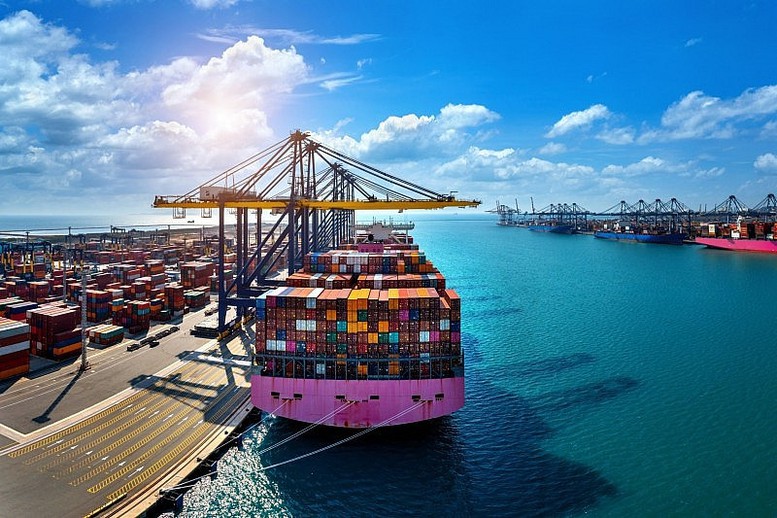
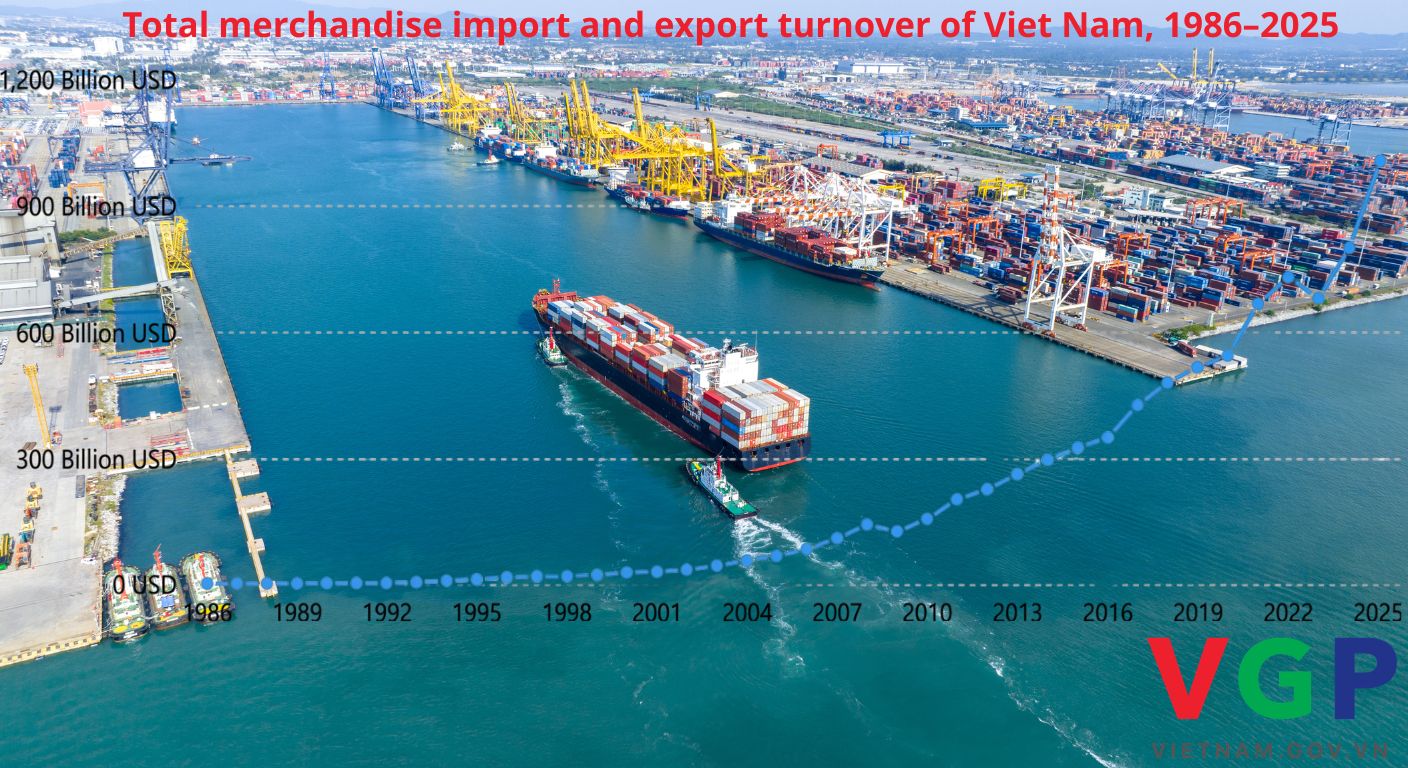
Tran Thanh Hai, Deputy Director of the Import-Export Department - Ministry of Industry and Trade said that in 1986, Viet Nam’s total import and export turnover stood at only nearly US$3 billion, including approximately US$789 million in exports and US$2.16 billion in imports. Forty years later, the picture has fundamentally changed. In 2025, total merchandise trade reached approximately US$930.1 billion, up 18.2 percent year on year, with exports exceeding US$430 billion. Viet Nam has risen into the group of the world’s 15 largest trading economies.
These figures reflect more than an increase in scale. More importantly, they demonstrate a profound transformation: from a relatively closed economy to a highly open one; from exports dominated by products with low processing content to manufactured and processed industrial goods; from a limited number of traditional markets to an extensive network of trading partners; and from foreign trade being conducted primarily by a small number of enterprises to increasingly broad participation by businesses from all economic sectors.
Source: National Statistics Office
Opening up markets and unleashing resources
One of the most fundamental changes brought about by Doi Moi to import and export activities was the transition from a centrally planned, subsidized economy to a market economy under State management.
In the early years of Doi Moi, the gradual relaxation of restrictions on import and export activities enabled more localities, economic organizations and enterprises from different economic sectors to directly engage in foreign trade.
Before 1986, only around 30 firms were authorized to conduct import and export business. By 2005, the number of traders directly engaged in import and export had risen to more than 35,700 enterprises. This was not merely an increase in the number of businesses, more importantly, it represented a shift in management thinking—from the State directly organizing foreign trade activities to the State creating a legal, policy and business environment in which economic entities could proactively participate and compete.
This process significantly unlocked the economy’s resources. Import and export, once an activity reserved for a limited number of designated entities, became a broad business arena in which enterprises could proactively seek markets, select partners, organize production and participate in cross-border supply chains.
At the same time, resources for import and export have been mobilized in increasingly diverse forms, ranging from capital, technology and raw materials to management capabilities and international market networks.
This has provided an important foundation for Viet Nam’s foreign trade to enter a period of rapid expansion in terms of scale, products and markets.
It can be said that the most important achievement of 40 years of Doi Moi in the import and export sector lies not only in how many times trade turnover has increased, but also in the transformation of the actors and drivers of foreign trade.From small-scale exports to a key growth driver
Export scale is one of the clearest indicators of Viet Nam’s economic transformation. From US$789 million in 1986, export turnover rose to US$32.4 billion in 2005, US$48.6 billion in 2007, more than US$405 billion in 2024 and approximately US$430 billion in 2025. Compared with the starting point in 1986, Viet Nam’s merchandise exports have increased by hundreds of times.
Notably, export growth has become increasingly associated with industrialization and modernization. In the early years of Doi Moi, exports were dominated by agricultural products, minerals and goods with limited processing content. Today, processing and manufacturing industries have become the backbone of Viet Nam’s exports.
In the first six months of 2026, exports of processed and manufactured industrial products were estimated at approximately US$239.8 billion, accounting for 90 percent of total export turnover. Computers, electronic products and components; telephones and parts; machinery and equipment; textiles and garments; footwear and other product groups have become Viet Nam’s major exports.
This shift shows that exports are no longer simply about bringing domestically produced goods to international markets. They are increasingly becoming an integral part of organizing production on a global scale.
On the import side, the commodity structure also clearly reflects the role of imports in domestic production.
In the first six months of 2026, production inputs accounted for approximately 94.1 percent of total import turnover, with machinery, equipment, tools and spare parts accounting for 56 percent, and raw materials, fuels and other production inputs accounting for 38.1 percent.
This shows that imports should be assessed not only in terms of their scale, but, more importantly, in terms of their purpose and contribution to domestic production capacity.
Expanding market space and deepening international integration
Another fundamental transformation over the past 40 years of Doi Moi has been the unprecedented expansion of Viet Nam’s market space. Before Doi Moi, Viet Nam’s export markets were mainly concentrated in socialist countries.
From early 1990s, Viet Nam gradually normalized and expanded economic relations with major economies. Viet Nam’s accession to ASEAN in 1995, APEC in 1998 and the WTO in 2007 marked important milestones in the country’s international economic integration process.
To date, Viet Nam has participated in 17 free trade agreements (FTAs) involving more than 60 countries and territories, while Vietnamese goods have reached more than 230 countries and territories.
Next-generation, high-standard FTAs such as the CPTPP, EVFTA, UKVFTA and RCEP continue to expand market opportunities and create conditions for Vietnamese enterprises to participate more deeply in regional and global supply chains.
From the perspective of specialized State management, the Import-Export Department recognizes that the effectiveness of integration can no longer be measured simply by the number of markets or FTAs signed. It must also be reflected in the ability to translate tariff commitments into actual export turnover.
These requirements not only open up new growth opportunities for import and export activities but also encourage Vietnamese enterprises to improve product quality, innovate technologies and better meet international market standards.
From exporting products to participating in value chains
Forty years of Doi Moi have also witnessed the increasingly clear formation of production chains oriented toward international markets. Electronics, computers, telephones, machinery and equipment, textiles and garments, footwear and leather products, wooden products, seafood and many other industries have built substantial export capacity.
From border management to modern trade governance
Alongside the rapid development of import and export activities, the approach to State management has also undergone profound changes.Sustained trade surpluses – a hallmark of a new development phase
Another important indicator of Viet Nam’s transformation is the change in its trade balance. During the early years of Doi Moi, Viet Nam recorded large trade deficits.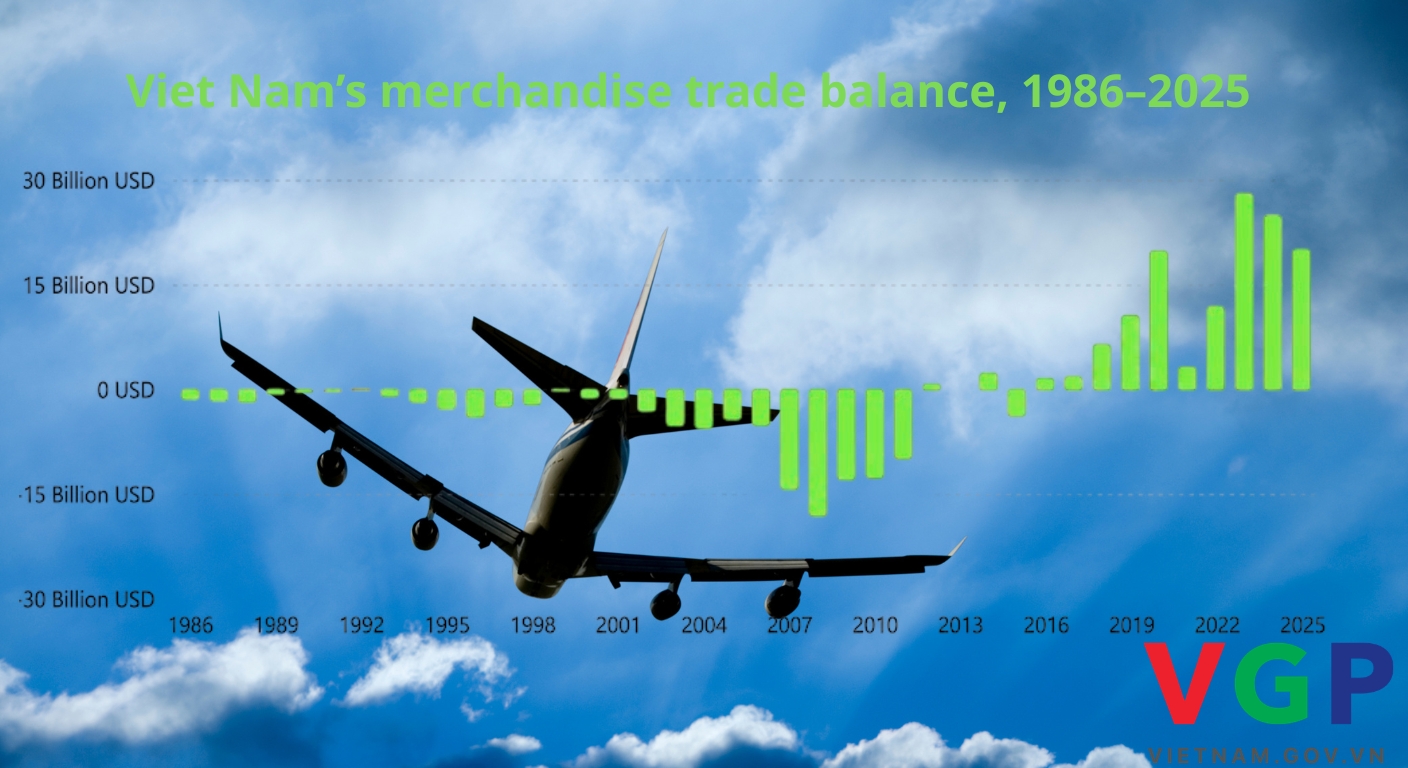
Source: National Statistics Office
While trade deficits in the early years of Doi Moi reflected an economy in the process of accumulating resources and expanding production and investment, the maintenance of trade surpluses for the past decade demonstrates a significant improvement in Viet Nam’s export capacity, both in terms of scale and commodity structure, as well as its ability to participate in global production and supply chains.
From 2012, the trade balance began moving toward equilibrium, with Viet Nam recording trade surpluses in some years. The real turning point came in 2016, when Viet Nam began maintaining consecutive annual trade surpluses.
According to the Ministry of Industry and Trade, the trade surplus was approximately US$1.77 billion in 2016, US$2.11 billion in 2017, US$6.83 billion in 2018, US$10.87 billion in 2019 and nearly US$20 billion in 2020.
Entering a new phase: Faster growth must be accompanied by quality and sustainability
Looking back on 40 years of Doi Moi, it can be affirmed that Viet Nam’s import and export sector has undergone a profound transformation. From a small-scale sector heavily dependent on administrative management and concentrated on a limited number of traditional markets, trade has become one of the key pillars of the economy, connecting Viet Nam with major production and consumption centers around the world.Building on achievements of 40 years of Doi Moi
Forty years of Doi Moi have demonstrated an important lesson: when development thinking changes, institutions change and social resources are unleashed, an economy’s capacity can change at a very rapid pace.
From less than US$1 billion in exports in 1986 to more than US$430 billion in 2025; from a small number of enterprises authorized to conduct foreign trade to the participation of hundreds of thousands of businesses; from export markets concentrated in a limited number of countries to a trading network spanning more than 230 countries and territories; and from exports dominated by raw and semi-processed products to an export structure in which processing and manufacturing industries account for an overwhelming share—these are structural transformations that reflect the achievements of Doi Moi and international economic integration.
However, the road ahead cannot simply be a repetition of the growth model of the past 40 years. If the initial phase of Doi Moi focused on opening up, and the subsequent phase emphasized integration, the new development phase must focus on improving the quality of integration and strengthening the economy’s autonomy within an increasingly complex global trading system.
Viet Nam’s exports in the future must not only be larger, but better; not only have higher turnover, but also generate greater value added; not only expand markets, but also establish a stronger position in each market; and not only participate in supply chains, but gradually raise the position of Vietnamese enterprises within global value chains.
This is also the way to turn the achievements of 40 years of Doi Moi into a foundation for a new phase of development—a phase in which Viet Nam is not only a country with a large trade volume, but also gradually becomes a country with strong trade competitiveness, a robust business community, resilient supply chains and an increasingly proactive position in the global economy.
The 81st anniversary of National Day and the 40th anniversary of Doi Moi therefore provide not only an occasion to look back on achievements, but also an opportunity to more clearly define the requirements for the road ahead. With the foundation that has been built, together with the determination to further improve institutions, enhance enterprise capacity and proactively pursue international integration, import and export activities will continue to play crucial role in achieving the goal of rapid and sustainable development, while enhancing Viet Nam’s economic position and strength in the new era./.