
Viet Nam needs to shift from factor-driven to productivity-driven growth: ADB Country Director
VGP - The Asian Development Bank (ADB) maintains a positive outlook for Viet Nam’s economy, with growth expected to remain robust in 2026 and 2027, while stressing the need for stronger productivity, domestic value addition and structural reforms to sustain growth over the longer term.
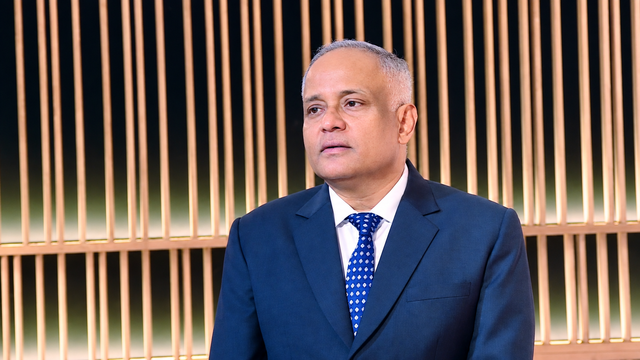
ADB Country Director for Viet Nam Shantanu Chakraborty - Photo: VGP/Quang Thuong
According to ADB Country Director for Viet Nam Shantanu Chakraborty, ADB has slightly raised its growth forecast for Viet Nam to 7.8 percent in 2026 and 7.6 percent in 2027.
The outlook is underpinned by broad-based expansion across key drivers, including consumption, investment, foreign direct investment (FDI) and trade, which have all contributed to growth during the first seven to eight months of the year, Chakraborty said.
However, the country continues to face external and domestic risks. Geopolitical uncertainties, weaker demand from some major trading partners, potential supply-chain disruptions, and higher energy and imported food prices could affect the economic outlook. At home, strong credit growth also warrants close monitoring, while maintaining momentum in public investment, domestic consumption and FDI remains important.
How to make Viet Nam remain competitive as other Southeast Asian economies?
A key priority for Viet Nam, in ADB's view, is to move decisively from factor-driven growth to productivity-driven growth. Although Viet Nam has successfully attracted substantial FDI, domestic value added within the FDI and manufacturing sectors remains below its potential.
The focus should therefore shift toward capturing more value domestically, upgrading the workforce, strengthening technology transfer and designing incentives that encourage both foreign and domestic firms to generate greater value within the country.
Human capital development will be particularly important as investment moves into emerging sectors such as fintech, artificial intelligence and semiconductors. Developing the skills needed by these industries would help Viet Nam both sustain FDI inflows and strengthen domestic participation in higher-value activities.
The ADB representative also highlighted the importance of improving the investment environment. Streamlining administrative procedures, providing better infrastructure and logistics, expanding access to long-term land and finance, and ensuring greater policy predictability would help Viet Nam remain competitive as other Southeast Asian economies increasingly compete for investment.
Over the next 12–24 months, two priorities stand out: upgrading skills and technology transfer from foreign investors to domestic companies, alongside stronger incentives to increase domestic value capture from FDI.
According to Chakraborty, for more inclusive and sustainable growth, Viet Nam should also expand investment in rural and climate-resilient infrastructure, helping extend economic opportunities to rural and underserved communities. At the same time, accelerating public investment and addressing delays in major infrastructure projects would strengthen the foundations for long-term growth.
Looking toward Viet Nam's ambition of becoming a high-income economy by 2045, the ADB representative stressed that the quality of investment matters more than the volume of capital attracted. FDI should contribute to high-quality assets, technology, infrastructure and domestic value creation rather than focusing primarily on assembly and exports.
Long-term policy predictability will therefore be essential to encourage investors to commit to Viet Nam over decades, including investment in infrastructure and domestic asset creation. Such a shift, Chakraborty indicated, would not only raise productivity and domestic value added but also strengthen the economy's resilience and climate sustainability./.