Viet Nam unites to tackle noncommunicable diseases
VGP - The Ministry of Health and the World Health Organization (WHO) brought together representatives from the Government, health and non-health sectors, and partners in Ha Noi to speed up action on noncommunicable diseases (NCDs) - the leading cause of death in Viet Nam.
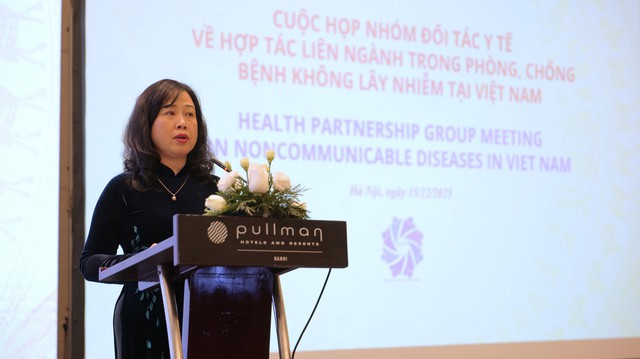
Minister of Health Dr Dao Hong Lan - Photo: VGP/Kim Anh
NCDs – including cardiovascular disease, cancer, chronic respiratory disease and diabetes – are the leading cause of death in Viet Nam, accounting for about 80 percent of deaths, many of them premature.
Minister of Health Dr Dao Hong Lan emphasized Viet Nam's strong political commitment to prioritizing NCDs as part of broader health sector reforms.
"Politburo Resolution No. 72 dated September 9, 2025 on "Breakthrough solutions to strengthen the protection, care, and improvement of people's health" calls for a fundamental shift in mindset—from a treatment-centered approach to proactive disease prevention and comprehensive health promotion for the population, particularly in the prevention and control of noncommunicable diseases. This shift contributes to realizing the goal of building a healthy society and improving both life expectancy and quality of life for all people.
Notably, on December 10, 2025, the National Assembly of the Socialist Republic of Viet Nam officially adopted the Law on Disease Prevention. This represents a milestone of particular significance, providing a strong legal foundation for a decisive transition toward prevention, strengthening the disease prevention system, and enabling the coordinated implementation of solutions for the prevention and control of noncommunicable diseases in the period ahead," the Minister said.
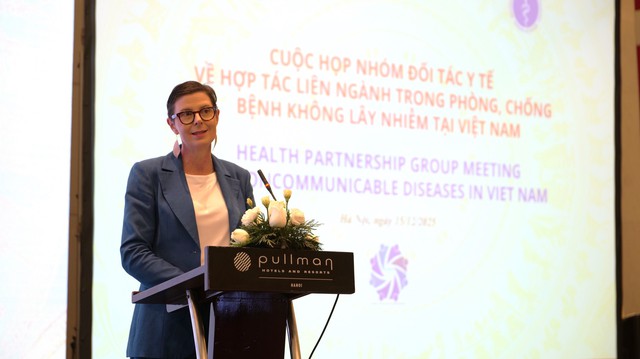
WHO Representative in Viet Nam Dr Angela Pratt - Photo: VGP/Kim Anh
WHO Representative in Viet Nam Dr Angela Pratt said, "Imagine a new epidemic sweeping the globe, killing 45 million people this year, including half a million people in Viet Nam. This is actually happening now, and the situation will get worse unless we act.
"NCDs are the world's biggest killers – claiming more lives than HIV, TB, and malaria combined. This is an expanding crisis we cannot ignore."
The meeting highlighted the urgent need for coordinated action across sectors such as health, education, finance, environment, agriculture and transport.
"Tackling NCDs is something the health sector cannot do alone," Dr Pratt said, "This is why the theme of the meeting, focusing on multisectoral collaboration, is so important. The most effective way to reduce smoking, for example, is through taxation. Or air pollution – the health sector bears the consequences of this problem, but the solutions mostly belong in industry, agriculture, transport and energy," Dr Pratt said.
Participants reviewed best practices and discussed strengthened collaboration, including leveraging new technologies and integrating health in all policies.
Dr Pratt praised the Government's leadership on NCD prevention and management.
"We have seen exciting progress in Viet Nam recently. Changes to tobacco taxation will result in 2.1 million fewer smokers in the next 5 years and avert 700,000 premature deaths. Viet Nam is also making big gains in hypertension management. Health sector reforms under Resolution 72 present a historic opportunity to prioritize disease prevention and strengthen primary health care," said Pratt
"WHO is proud to accompany Viet Nam in these efforts, and I am confident that with continued support from international and national partners, we can scale up action against NCDs and build a healthier Viet Nam," she finalized./.
