Viet Nam targets to become one of Asia's leading cultural and creative centers by 2045
VGP - The Government has approved the External Cultural Strategy to 2030, with a vision to 2045, setting out a long-term roadmap to strengthen Viet Nam's cultural soft power and elevate its international profile.
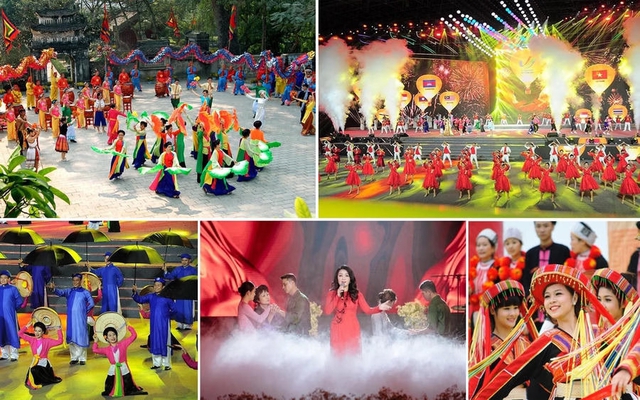
The strategy positions culture as both the foundation of national identity and a strategic resource for sustainable development, international cooperation and national competitiveness. It aims to deepen international cultural integration by promoting Vietnamese cultural values abroad while selectively embracing the cultural achievements of other nations to help build an advanced Vietnamese culture imbued with national identity.
Ultimately, the strategy seeks to transform culture into a key source of Viet Nam's soft power, contributing to sustainable development, enhancing the country's influence on international stage and enriching global cultural diversity.
Targets through 2030
For the 2026–2030 period, the strategy sets out a series of measurable goals to expand international cultural cooperation with foreign governments, international organizations and enterprises operating in the cultural and creative industries.
Priority will be given to sectors in which Viet Nam holds competitive advantages, including cinema, performing arts, cultural tourism and heritage, with the aim of increasing the global competitiveness of Vietnamese cultural products.
During this period, Viet Nam aims to secure at least five prestigious international awards in music, film, literature and other cultural fields. It also plans to establish and sustainably operate five internationally recognized arts festivals featuring distinctive local identities, with the ambition of developing them into leading cultural destinations in the region.
In heritage preservation, the country targets to obtain international recognition from UNESCO and other organizations for at least five additional cultural heritage sites or titles. At the same time, ten cultural and heritage tourism destinations will be developed into nationally branded attractions with global competitiveness.
The strategy also aims to establish between one and three new Viet Nam Cultural Centers abroad in a bid to expand the Southeast Asian country's cultural presence overseas.
Vision to 2045
By 2045, Viet Nam aims to become one of Asia's leading cultural and creative centers by harnessing the opportunities of the digital economy and digital society to strengthen its cultural soft power.
The country targets winning at least 15 additional prestigious international awards in culture, the arts and creative industries, hosting at least one major global event such as a World Expo, Specialized Expo or another world-class cultural or sporting event, and opening at least five more Viet Nam Cultural Centers abroad.
The strategy also seeks international recognition for 15 additional cultural heritage titles and sets the goal of placing Viet Nam among ASEAN's top three countries and the world's top 30 in the Global Soft Power Index.
Expanding Viet Nam's global cultural footprint
The strategy calls for modernizing cultural diplomacy and diversifying approaches to promoting Viet Nam's cultural identity worldwide.
Cultural promotion will be further integrated into high-level diplomatic visits by Vietnamese leaders abroad and visits by foreign leaders to Viet Nam. Programs such as Viet Nam Culture Weeks and Viet Nam Culture Days overseas will be upgraded through closer collaboration with host countries, wider public engagement and stronger international media outreach.
Promotional activities will increasingly feature traditional performing arts, martial arts, folk games and traditional sports to introduce Viet Nam's rich cultural heritage to international audiences.
The strategy also encourages greater Vietnamese participation in major international film festivals, art exhibitions, book fairs and other cultural events, while integrating cultural promotion into major international political and economic forums.
Sports diplomacy will serve as another key pillar, with Viet Nam seeking to host and participate in more regional and international sporting events to showcase its traditional sports and cultural heritage.
Human resource development is identified as a key factor in strengthening Viet Nam's external cultural engagement. Under the strategy, cultural officers will be gradually assigned to overseas representative missions where appropriate, while cultural counsellors or attachés will be deployed at diplomatic missions in strategic partner countries. Priority will initially be given to comprehensive strategic partners by 2030 before expanding to other strategic partners by 2045.
Officials engaging in external cultural affairs will receive specialized training in Vietnamese culture, world cultures, international law and intellectual property, together with practical skills in event management, multimedia communications and digital cultural governance.
The strategy also emphasizes the need to equip cultural professionals with knowledge of emerging technologies, including artificial intelligence (AI), big data, virtual reality (VR) and augmented reality (AR), enabling them to promote Vietnamese culture more effectively in digital environments.
In addition, students, researchers, professionals and workers preparing to study or work overseas will receive training in Vietnamese history, culture and international communication, enabling them to serve as effective cultural ambassadors while helping strengthen national identity among younger generations in an increasingly interconnected world./.