Top Vietnamese leader’s state visits create breakthroughs in relations with India and Sri Lanka
VGP - General Secretary and President To Lam’s state visits to India from May 5–7 and to Sri Lanka from May 7–8 achieved comprehensive and substantive outcomes of long-term strategic importance, contributing to enhancing Viet Nam’s position and prestige in South Asia and globally, while opening a new chapter of deeper, more effective and more comprehensive cooperation with the two countries, said Minister of Foreign Affairs Le Hoai Trung.
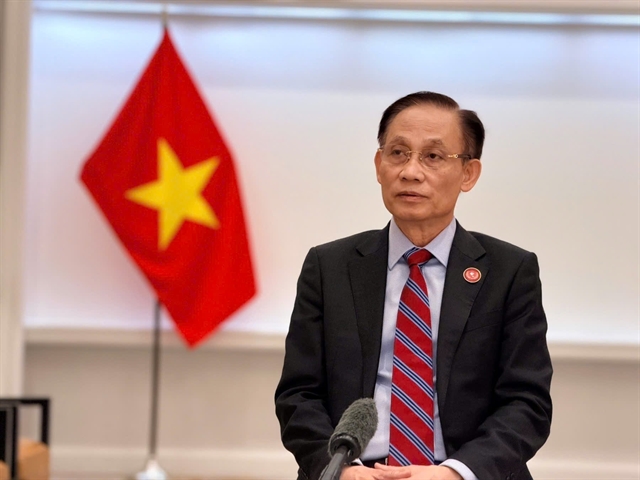
Minister of Foreign Affairs Le Hoai Trung
Speaking to the press, Le said the visits were of special significance and historic importance, taking place as Viet Nam and India commemorate the 10th anniversary of their Comprehensive Strategic Partnership and shortly after To Lam assumed his new position.
The state visit to Sri Lanka marked the highest-level visit by a Vietnamese leader since the establishment of diplomatic relations between the two countries.
The visits produced extensive and meaningful outcomes. Viet Nam and India agreed to upgrade bilateral ties to an Enhanced Comprehensive Strategic Partnership, while Viet Nam and Sri Lanka elevated their relationship to a Comprehensive Partnership, creating new political frameworks to further strengthen mutual trust and understanding.
More than 50 cooperation agreements were signed between Viet Nam and India, alongside 11 agreements with Sri Lanka, reflecting the strong commitment of all sides and creating fresh momentum for bilateral cooperation.
Leaders of Viet Nam, India and Sri Lanka also discussed measures to bolster ties between the Communist Party of Viet Nam and the ruling parties of the two countries, while enhancing parliamentary cooperation and people-to-people exchanges.
According to the minister, leaders of the three countries paid particular attention to strategic orientations aimed at removing bottlenecks, expanding markets, strengthening economic connectivity, investment, infrastructure, science and technology, innovation and supply chains, accompanied by a range of concrete cooperation proposals. The sides also reaffirmed their determination to deepen defense and security cooperation, while identifying the economy and science-technology cooperation as new pillars of bilateral ties. Practical programs to strengthen education and training cooperation were also discussed.
Regarding India, the outcomes of the visit have elevated bilateral relations to a new level, opening up broad prospect for cooperation in security and defense, trade and investment, science and technology, education and training, culture and people-to-people exchanges, paving the way for a "golden era" in bilateral relations.
For Sri Lanka, both sides agreed to continue consolidating friendship and cooperation, strengthening political trust and expanding collaboration in a comprehensive and substantive manner across multiple sectors. The two countries also agreed to raise bilateral trade turnover to five times the current level in the coming years. Sri Lanka's recent economic recovery is expected to create new opportunities for cooperation in trade, minerals, manufacturing, seaports and other areas.
Against the backdrop of increasing global uncertainty and volatility, leaders of the two countries underscored the importance of strengthening close coordination and mutual support on the basis of respect for international law and the United Nations Charter, while promoting multilateralism.
Minister Le affirmed that the visits reflected the concrete implementation of Viet Nam's foreign policy of independence, self-reliance, peace, friendship, cooperation and development, as well as diversification and multilateralization of external relations, including efforts to deepen ties with traditional friends and strengthen relations with key and major partners in the Asia-Pacific region.
The minister added that in the coming period, Viet Nam will coordinate closely with India and Sri Lanka to effectively implement high-level agreements and signed cooperation documents, while proactively addressing bottlenecks and obstacles in order to deliver more tangible and measurable outcomes.
Cooperation with India will prioritize economic connectivity, trade, investment, strategic infrastructure, logistics and supply chains, science and technology, innovation, culture and tourism. Meanwhile, cooperation with Sri Lanka will focus on infrastructure, telecommunications, high-tech agriculture, fisheries, green transition and tourism, particularly spiritual tourism./.