
VNeID drives Viet Nam’s digital transformation
VGP - Viet Nam’s national digital identity application VNeID has become a cornerstone of the country’s e-government and digital society, evolving rapidly from its pandemic-era origin into a universal gateway for public and private online services.

Launched during COVID-19 pandemic period as a health declaration platform, the app has expanded into a nationwide authentication system that now connects citizens to healthcare, social welfare, taxation, banking, education, transportation, and administrative services.
So far, VNeID has 67 million digital identity accounts and integrates 50 digital services. Meanwhile, the National Public Service Portal provides access to 4,700 administrative procedures, processed 11.5 million online applications in 2025, and helped save more than VND4 trillion (approximately US$160 million) in social costs. VNeID also facilitated the disbursement of VND33 trillion in social welfare payments to 675,000 beneficiaries.
VNeID is now the main login method for major national platforms, supporting nearly 30 million accesses to the National Public Service Portal, 11 million logins to Viet Nam Social Security's VssID, and over 2 million authentications on the General Department of Taxation's eTax system.
Digital identity reduces time and cost for citizens
VNeID's adoption has reshaped service delivery across key sectors.
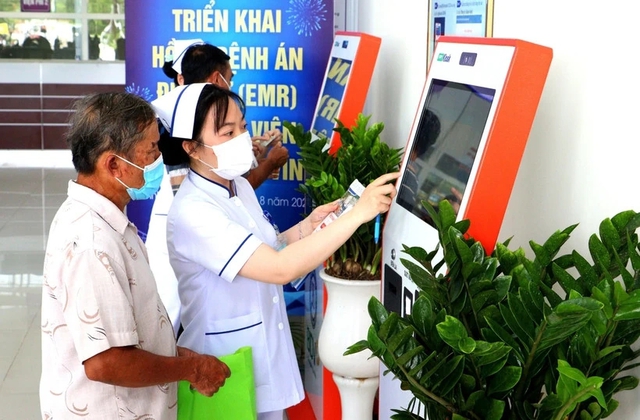
In healthcare, Ha Noi became the first locality to deploy digital health insurance cards via the app. At Saint Paul Hospital, almost 30 percent of outpatients used VNeID in the first two weeks of implementation, enabling 20–25 percent faster check-in times by allowing automatic verification, preventing duplicate patient records, and reducing manual processing.
The corporate sector has also integrated VNeID into hiring and onboarding workflows. Major banks and telecom companies now use digital ID scanning to populate forms and sign contracts electronically, cutting processing time from 30 minutes to about 5 minutes and reducing data entry errors.
Air travel has seen similar change. At airports, passengers can check in using facial recognition linked to VNeID, removing the need for paper documents. Citizens can also complete vehicle registration, tuition payment, hospital fees, pensions, and subsidies directly on the app through QR payments, bank transfers, and e-wallet integration.
All 34 provinces and cities have delivered social welfare support through bank accounts instead of cash. More than 2.5 million beneficiaries have received over VND24 trillion (≈ US$1 billion) digitally, helping save an estimated VND 51 billion in travel expenses previously incurred by recipients collecting aid in person.
In social insurance payments, 78 percent of retirees and insured recipients now receive their disbursements by bank transfer, marking a major milestone in digital welfare modernization.
Nationwide, hospitals now support fully cashless payments, while the Ministry of Education and Training has instructed schools to implement online fee connections to improve transparency and efficiency in tuition and admission payment management.
Since September 2025, VNeID has enabled citizens to submit scanned land-use certificates online for government review, supporting a national 90-day land data cleansing campaign to synchronize 49.7 million land plots with the National Population Database, reducing duplication and record inconsistencies.
A digital defense instrument against online scams
As online fraud grows more sophisticated — including impersonation, phishing links, illicit SIM cards, and fake financial accounts — VNeID is increasingly recognized as a national tool for cybersecurity protection.
The app uses multi-factor identity verification, combining biometric facial recognition, OTP authentication, trusted device recognition, and direct linkage to the National Population Database, making identity impersonation extremely difficult.
Financial institutions now widely require level 2 VNeID verification, sharply reducing fake accounts previously used for criminal purposes such as money laundering and cyber fraud. Localities that have actively promoted VNeID have reported a notable decline in phishing-based scams, as citizens are encouraged to complete public service transactions only through official digital channels on the app, avoiding external or unverified links.
The platform also supported efforts to remove spam SIM cards, ghost bank accounts, and illegitimate welfare recipients, addressing key enablers of digital crime.
Toward "One Citizen, One ID, One Digital Journey"
Experts have compared VNeID's trajectory to global digital ID models such as Singapore's SingPass and India's Aadhaar, both national systems enabling centralized authentication for millions to over a billion users.
Analysts attribute VNeID's rapid rise to three factors: high-quality synchronized population data, sustained policy support, and citizen-centric design.
The app is no longer just a digital utility — it is becoming critical national digital infrastructure, supporting faster public services, lower costs, and stronger protection for citizens in the era of the Fourth Industrial Revolution.
Viet Nam is now moving closer to its long-term digital governance vision: "One citizen – one ID – one digital journey."
A future where administrative procedures, welfare support, education, healthcare, and public engagement can be completed securely through a single verified digital identity./.