
Viet Nam completes elimination of temporary and dilapidated houses nationwide
VGP - Viet Nam has completed the goal of building more than 334,000 new residential units in replacement of all temporary and dilapidated housing nationwide, five years ahead of schedule—marking a major milestone in ensuring people’s right to housing. However, continued efforts are needed to ensure no one is left without shelter, Prime Minister Pham Minh Chinh said.
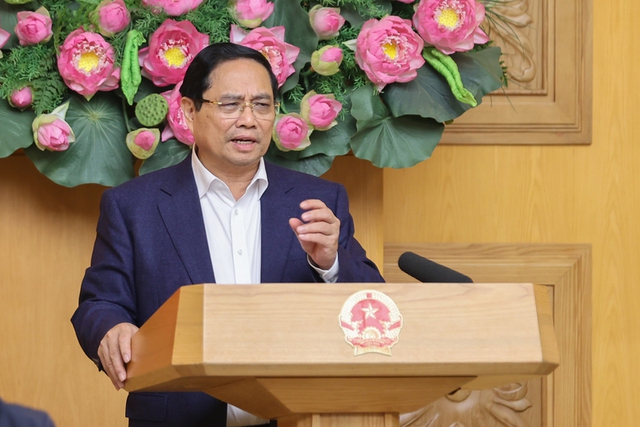
Prime Minister Pham Minh Chinh at the fourth meeting of the Central Steering Committee for Housing Policy and the Real Estate Market, Ha Noi, December 17, 2025 - Photo: VGP/Nhat Bac
Addressing the 4th meeting of the Central Steering Committee for Housing Policy and the Real Estate Market in Ha Noi on December 17, the Prime Minister called for stronger, more coordinated actions to meet housing demand and promote sustainable development of the real estate sector.
The meeting reviewed real estate management and social housing development in 2025, while outlining key tasks and solutions for 2026 and beyond.
Prime Minister Pham said that the real estate and housing market showed positive changes in 2025. With the engagement of the entire political system and society, Viet Nam successfully eliminated temporary and dilapidated housing nationwide.
Highlighting breakthroughs in social housing this tenure (2021-2025), the Prime Minister said the one-million-unit scheme has already reached 62 percent of its target.
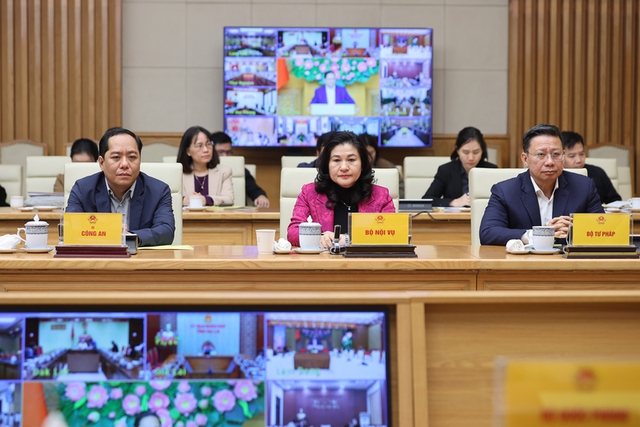
Photo: VGP/Nhat Bac
At the current pace, the scheme could be completed by 2028. He urged localities to proactively allocate land and construction materials, streamline administrative procedures, swiftly remove obstacles, and accelerate social housing development—describing it as a highly humane policy that balances economic growth with social equity.
The Prime Minister also called for stronger price control measures, diversification of capital sources, expanded preferential credit for social housing and young buyers, and accelerated digital transformation to enhance transparency. He stressed the need to soon establish a state-run real estate and land-use rights exchange to better match housing supply with demand and fully safeguard people's right to accommodation.
Finally, the Government leader encouraged businesses, especially major enterprises, to further engage in social housing development based on the principle of "harmonizing benefits and sharing risks," contributing to a more inclusive and sustainable housing market.
Since early 2025, the Government has issued a series of resolutions, directives and notices, and the Prime Minister has convened six national conferences on social housing and the real estate market, helping remove legal bottlenecks and revive stalled projects. These measures have unlocked resources, increased housing supply, and supported a sector that contributes about 11 percent to GDP, with real estate accounting for around 4.5 percent.
The one-million-unit social housing scheme has reached 62 percent of its target, with 698 projects involving more than 657,000 apartments either completed, under construction or approved.
Challenges persist, including slow project implementation, limited focus on social housing land and product structure, supply imbalance toward mid- and high-end segments, and housing prices that remain unaffordable for most people./.