
Law on the State of Emergency adopted
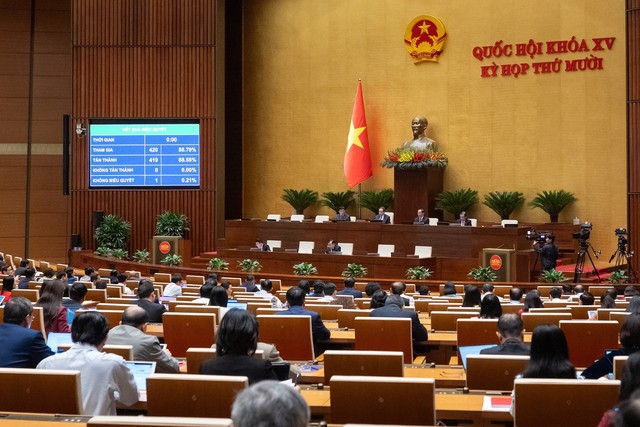
VGP - Law-makers on Wednesday adopted the Law on the State of Emergency, specifying principles, procedures, and authority for declaring, announcing, and lifting the state of emergency.
The law also regulates the measures to be applied during such situations; the implementation of related resolutions and orders; and the responsibilities of relevant agencies, organizations, and individuals.
Article 2 defines a "state of emergency" as a situation declared and announced by competent authorities in one or more localities or nationwide when a disaster—or the serious threat of one—poses a grave danger to human life and health, the assets of the State, organizations, or individuals, or threatens national defense, security, public order, or social safety.
The law classifies emergencies into three categories: disaster emergencies, national security/public safety emergencies, and defense-related emergencies.
The Standing Committee of the National Assembly holds the authority to decide on declaring or revoking a state of emergency.
Based on the Committee’s resolution, the President issues the formal proclamation. If the Committee cannot convene, the President may act directly.
The Prime Minister is responsible for submitting proposals to the Standing Committee regarding emergency declarations or cancellations. If the Committee cannot meet, the Prime Minister may propose directly to the President.
A state of emergency will be lifted once the threat of disaster has passed or the situation has been contained, and national security and public safety have stabilized.
The Law shall take effect on July 1, 2026./.