
Gov’t adopts action program on environmental protection, climate resilience
VGP - The Government has issued Resolution 208/NQ-CP promulgating an action program to implement the 14th Party Central Committee's Conclusion No. 75-KL/TW on environmental protection and proactive climate change response in the new era.

The action program aims to translate the Party's orientations into concrete policies and actions, improve the effectiveness of environmental governance, strengthen climate resilience, and accelerate the transition toward a green, circular and low-carbon economy.
It will provide the basis for ministries, sectors and localities to formulate implementation plans for the 2026-2030 period, with a vision toward 2045.
The program identifies nine key tasks, including (i) raising public awareness and mobilizing society-wide participation in environmental protection and climate adaptation; (ii) improving institutions, policies and legislation while strengthening enforcement; (iii) mobilizing and effectively utilizing resources; (iv) addressing pressing environmental challenges; conserving biodiversity and promoting the sustainable use of natural resources; (v) enhancing climate adaptation and disaster risk reduction; (vi) accelerating the green transition and the development of a circular and low-carbon economy; (vii) strengthening greenhouse gas emissions management; (viii) advancing science, technology, innovation, digital transformation and human resource development; and (ix) expanding international cooperation.
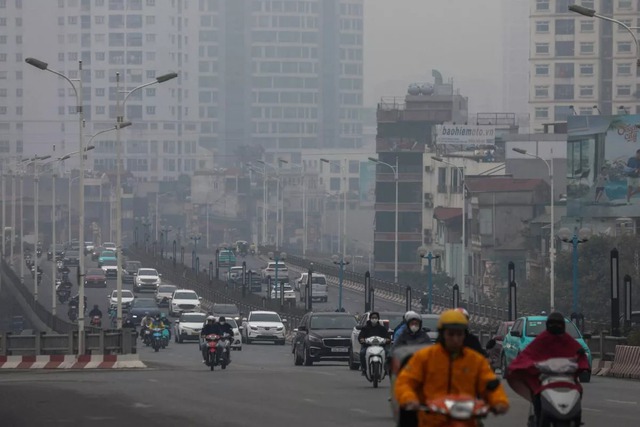
Priority on tackling urban air pollution
The program places priority on improving air quality management, with a particular focus on addressing air pollution in Ha Noi, Ho Chi Minh City and other major urban areas.
It also calls for stronger efforts to address water pollution in priority river basins, canals, lakes and other heavily polluted water bodies, while accelerating investment in wastewater collection and treatment systems for urban areas, industrial clusters and traditional craft villages.
The Government will tighten controls over pollutant discharges in environmentally sensitive areas to ensure they remain within the environment's carrying capacity.
The program also seeks to improve the effectiveness of household solid waste segregation to support the development of a circular economy. It promotes synchronized investment in waste collection, transportation, reuse, recycling and treatment integrated with energy recovery, while reducing dependence on direct landfilling.
In addition, the Government will promote the effective implementation of extended producer responsibility (EPR) by manufacturers and importers and foster the development of secondary materials markets.
The program also calls for proactive management of new waste streams generated during the green transition and tighter control over the import of obsolete, resource-intensive technologies and equipment that pose environmental risks.
Priority will also be given to tackling pollution in traditional craft villages in tandem with developing rural industries in a green, circular and sustainable manner. Other focus areas include mining and mineral processing sites, areas contaminated by chemicals and pesticides, and other environmental pollution hotspots.
Building climate-resilient cities
The action program also requires the review and improvement of standards, technical regulations and techno-economic norms for construction projects to better incorporate climate change adaptation requirements, alongside strengthened monitoring and evaluation of adaptation activities.
It prioritizes investment in resilient infrastructure capable of withstanding storms, floods, urban inundation, drought, saltwater intrusion and other impacts associated with climate change and sea-level rise.
The Government will also promote the development of climate-resilient cities, with particular emphasis on addressing flooding caused by extreme rainfall and high tides in major urban centers.
In the agricultural sector, the program encourages the adoption of climate-smart farming models that reduce greenhouse gas emissions while enhancing resilience to climate change.
It also calls for strengthening disaster response capacity through investment in emergency response forces and equipment to ensure timely response and recovery following natural disasters.
Region-specific adaptation measures based on nature, ecosystems and local communities will be implemented in high-risk areas, including the Northern Midlands and Mountainous Region, the Central Coastal Region and the Mekong Delta.
The program also calls for the reorganization of residential areas and the relocation of people from disaster-prone locations, while ensuring sustainable livelihoods and improving healthcare services for affected communities./.