EuroCham: Viet Nam becomes a core pillar of foreign investors' operations
VGP - For many European companies, Viet Nam is no longer simply part of a diversification strategy – it is becoming a core pillar of their regional and global operations, said Chairman of EuroCham Viet Nam Bruno Jaspaert.
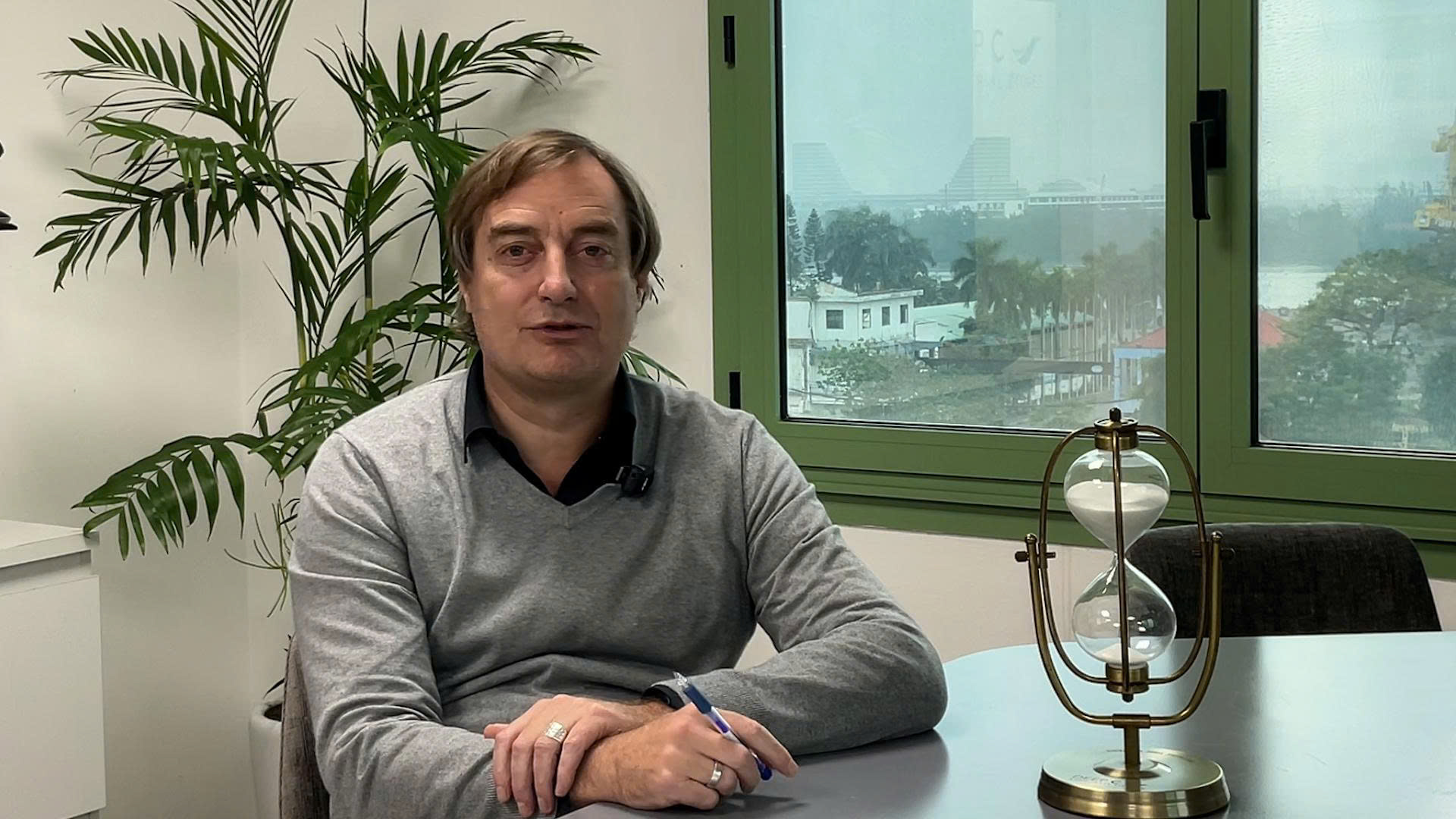
Chairman of EuroCham Viet Nam Bruno Jaspaert
Looking back on 2025, what stood out most to you about Viet Nam's development and its engagement with the European business community?
Chairman of EuroCham Viet Nam Bruno Jaspaert: What stood out most to me in 2025 was Viet Nam's ability to keep moving forward and even accelerate in a year that tested assumptions everywhere else. Geopolitical shifts, trade realignments, and climate pressures dominated global headlines, yet here in Viet Nam, resilience was not a slogan; it was something you could see and measure.
I have been living and working in Hai Phong for eight years now, and I often say it has become my second home. Watching the city and the country evolve year by year gives you a very grounded perspective. In 2025 alone, Viet Nam's GDP reached an estimated US$514 billion, growing by over 8 percent. That happened despite global uncertainty, not because of favourable external conditions.
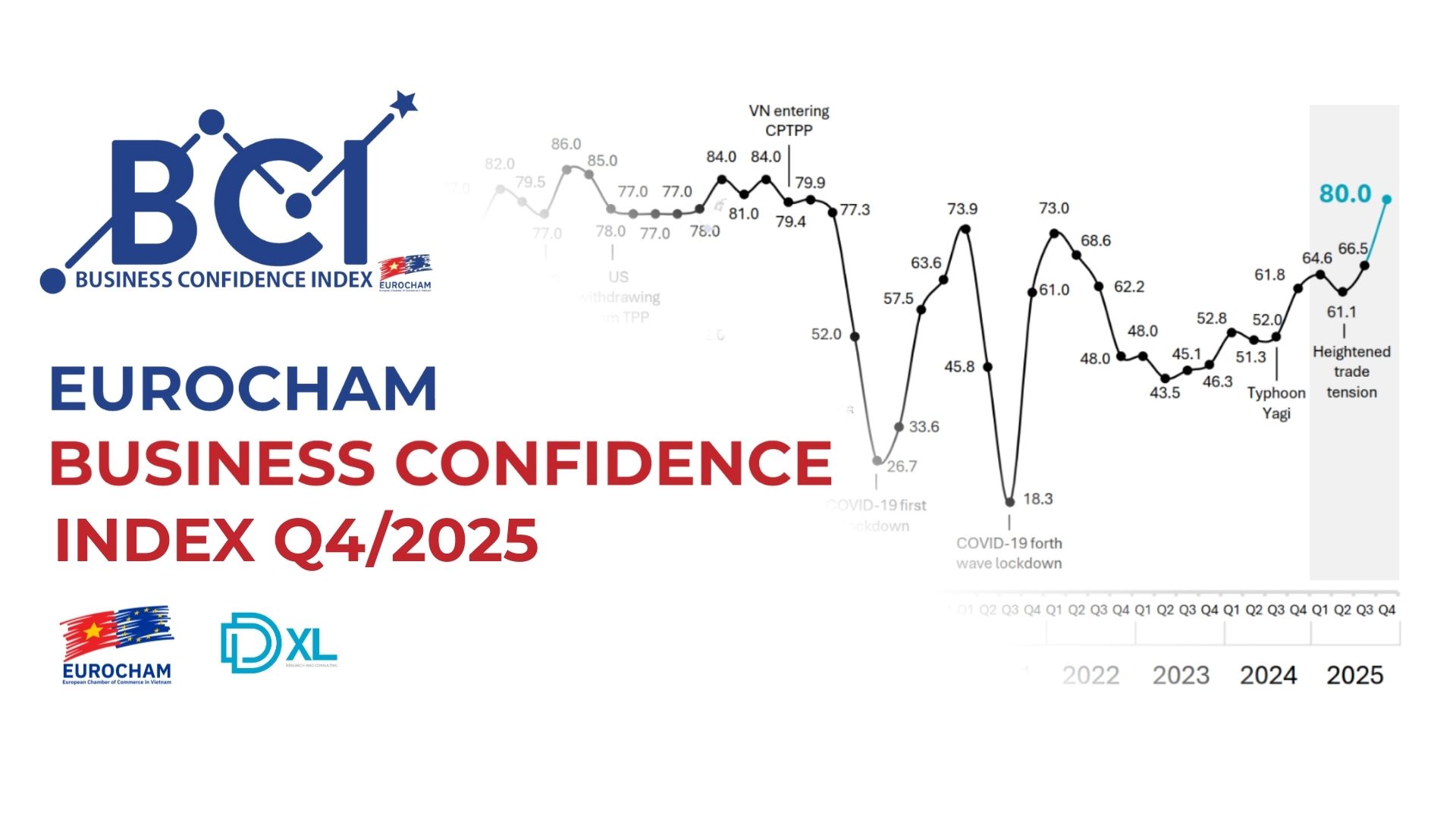
From the European business community's perspective, confidence mirrored performance. EuroCham's Business Confidence Index reached 80 points in Q4 2025 – the highest level in seven years, surpassing even pre-Covid levels. This is not just optimism; it reflects a shift from short-term caution to long-term commitment. For many European companies, Viet Nam is no longer simply part of a diversification strategy – it is becoming a core pillar of their regional and global operations.
Equally important in 2025 was the quality of engagement. Throughout the year, EuroCham maintained open and constructive dialogue with Vietnamese leadership at the national level and increasingly across provinces. I have said this before, and it continues to hold true: Viet Nam has one of the most adaptive governments I have encountered in my professional experience, from East to West. Senior leaders are increasingly open-minded, combining flexibility with a clear focus on delivering concrete outcomes. We held constructive dialogues with the Prime Minister and working sessions with multiple ministries to address key administrative bottlenecks for foreign-invested enterprises, and while progress takes time, tangible improvements have continued to unfold.
At the same time, 2025 once again demonstrated the strength and character of the EuroCham community. When extreme weather struck central Viet Nam with historic flooding, our members mobilised swiftly to support affected communities. Through our crowdfunding campaign, we raised over US$80,000 in record time to contribute to a resilient Viet Nam. This was not an abstract expression of commitment – it was action. It reflected a community that does not merely operate in Viet Nam, but truly calls this country home.
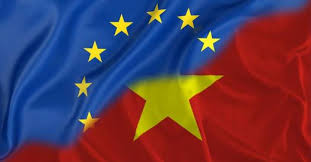
As Viet Nam enters 2026 – the Year of the Horse – with fresh momentum following the successful 14th National Party Congress and the elevation of EU–Viet Nam relations to a Comprehensive Strategic Partnership, what are your expectations for the country's economic outlook and reform trajectory in the year ahead?
Chairman of EuroCham Viet Nam Bruno Jaspaert: 2026 genuinely feels like a turning point. The successful conclusion of the 14th National Party Congress provides political continuity and a clearer reform direction, while the new elevation of EU–Viet Nam relations to a Comprehensive Strategic Partnership sends a powerful signal to the global business community.
I had the honour of attending the state dinner with President António Costa and President Luong Cuong marking this milestone, and the atmosphere captured something important: this partnership is no longer just about trade volumes, but about shared long-term ambition.
For European businesses, the Partnership provides clarity and momentum. It creates a framework for deeper cooperation in areas critical to Viet Nam's next growth phase – green energy, advanced manufacturing, digital connectivity, skills development, and secure infrastructure.
What is particularly encouraging is how European capabilities align so naturally with Viet Nam's priorities. High-speed rail, for example, is a nation-shaping project that will transform north–south connectivity and domestic logistics. As of late 2025, a leading European engineering have announced to partner in this project, bringing a wealth of experience from across Europe, this ambition is gaining both credibility and confidence.
The same alignment is visible in semiconductors, automation and innovation. As Viet Nam accelerates its innovation agenda under Resolution 57 and invests heavily in training future engineers, Europe brings expertise in precision technologies, advanced manufacturing and R&D. Early 2026 already saw a global leader in lithography technology is exploring the establishment of a semiconductor training and R&D centre at the National Innovation Center, while another European manufacturer is expanding a major R&D hub focused on mobility solutions and embedded software. All the while, European financial institutions have also pledged support for developing a modern financial ecosystem and high-quality human capital.
Economically, Viet Nam enters 2026 with strong momentum. Questions earlier in 2025 about whether global headwinds might derail the country's growth ambitions have largely been answered. Viet Nam remains among ASEAN's fastest-growing economies and is moving closer to becoming the region's third-largest economy. The Year of the Horse feels fitting – this is about momentum, endurance and forward movement.
With this new chapter in EU–Viet Nam relations, what further steps would you recommend Viet Nam prioritise to strengthen the investment and business environment, particularly to attract high-quality, sustainable, and long-term European investment?
Viet Nam has already done many big things right. The next phase is about consistency, predictability and effective execution.
Administrative procedures and regulatory clarity remain key areas where further improvements would have an immediate impact – especially for small and medium-sized enterprises. In our quarterly Business Confidence Index (BCI) survey, companies continue to flag issues around customs valuation, regulatory interpretation and uneven implementation across provinces. These may not be headline reforms, but they have a very real impact on competitiveness.
At EuroCham, we call these our "must-win battles". Through our Whitebook, BCI, and upcoming Impact 2030 roadmap, we are committed to advocating for clearer rules, stronger institutions and a business environment that attracts not just more investment, but better, greener and longer-term investment. That is how Viet Nam moves up the value chain.
Beyond governance and infrastructure, I would highlight one issue that feels both urgent and deeply personal: the air we breathe. Quite simply, we are the air we breathe in, and on too many days, particularly in the north, pollution levels have reached a point that cannot be ignored. If Viet Nam wants to truly stand out as a destination for high-quality talent and sustainable investment, this is a battle it must win.
Addressing this challenge means accelerating the transition already underway: expanding modern public transport networks, advancing electrification, protecting and growing urban green spaces, and critically, ensuring that rising electricity demand is met through cleaner energy sources rather than additional coal-fired capacity. Clean air may not always appear the cheapest choice in the short term, but its value for public health, productivity, and future generations is beyond measure.
Europe has walked this path before. Through increasingly rigorous sustainability standards and green compliance frameworks, we have learned that economic growth and environmental responsibility must advance together. EuroCham will continue serving as a bridge, connecting Europe's most advanced technologies and practical know-how with Viet Nam's bold ambitions, while supporting policymakers and businesses in turning sustainability commitments into real, measurable improvements. Because ultimately, a greener, cleaner Viet Nam is not just a vision; it is a shared responsibility.
How does EuroCham view Viet Nam's political, economic, and social trajectory over the coming decade – particularly as the country moves toward the Party's centenary in 2030 and the 100th anniversary of national founding in 2045?
Chairman of EuroCham Viet Nam Bruno Jaspaert: We look ahead with genuine confidence. Viet Nam's vision toward 2030 and 2045 is bold, but it is increasingly credible. Few countries combine political stability, demographic strength, strategic location and deep global integration in the way Viet Nam does today.
The key will be institutional quality, sustainability and human capital. Growth based purely on scale will not be enough; productivity, innovation and climate resilience must lead the next chapter.
EuroCham sees our role very clearly. With 1,400 members, nine affiliated associations and 20 sector committees, we will continue to act as a bridge between policy and practice – translating reforms into real outcomes and ensuring European businesses remain competitive, compliant and resilient.
Many of us, myself included, see Viet Nam as a second home. That is why we are confident in its future – and committed to advocating, year after year, to enhance Viet Nam's attractiveness for high-quality, sustainable investment as the country moves toward its centenary milestones./.
As the Lunar New Year approaches, this also marks another Tet you will spend working and living in Viet Nam. What does Tet represent to you personally, and what message would you like to share with the Vietnamese people as the country embarks on a new year and a new phase of development?
Chairman of EuroCham Viet Nam Bruno Jaspaert: Tet is a time when everything slows down just enough to reflect. When I walk through the city during these days, I cannot help but think about how much has changed since I first arrived: wider roads, busier ports, stronger industries, and a clear sense of direction. Yet the warmth, resilience and optimism of the people remain unchanged.
My message to the Vietnamese people is one of pride and confidence. What has been achieved did not happen overnight, nor by accident. It came from hard work, openness to the world, and a willingness to reform.
As Viet Nam enters a new year and a new development phase, I wish everyone health, stability and continued belief in the future. From the European business community, you have partners who are here to stay – not just investors, but long-term companions on this journey.
Thank you so much!