
Elderly citizens to receive free annual health checks from 2026
VGP - Elderly citizens will be entitled to free annual health examinations or health screenings right from 2026, according to the revised National Program on Health Care for the Elderly through 2030 adopted recently by the Government.
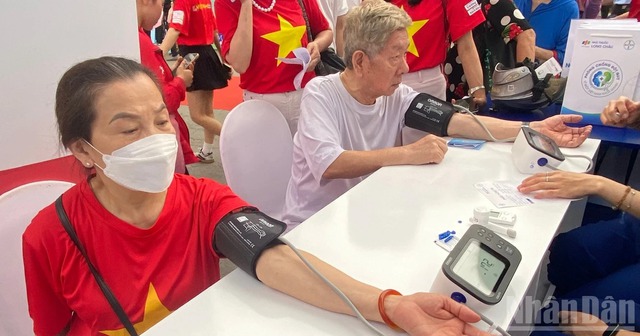
Illustration photo
Under the program, at least 90 percent of elderly citizens are expected to free-of-charge screening for non-communicable diseases, including cancer, cardiovascular diseases, and dementia by 2030.
The program also targets that 90 percent of commune-level administrative units will establish at least one elderly care club and one volunteer care team by the end of this decade.
All provinces and centrally governed cities are required to have elderly care facilities operating under a socialized model—through private investment or public-private partnership arrangements—by 2030. In addition, every locality must have either a dedicated geriatric hospital or a general hospital with a geriatric department.
The program calls for the development of digitally enabled care services utilizing social media and internet-based platforms.
The Ministry of Health was assigned as the lead agency responsible for coordinating with the Ministry of Finance and other relevant ministries and agencies to mobilize resources and implement the program nationwide.
Viet Nam currently has around 16.5 million people aged 60 and above, accounting for approximately 16 percent of the population, and the proportion is increasing rapidly.
Projects related to elderly care will be incorporated into the Ministry of Health's medium-term and annual public investment plans and submitted to the Ministry of Finance for consolidation before being reported to the Government.
The Ministry of Home Affairs has identified the "silver economy" as a strategic priority for the third quarter of 2026, aiming to harness the potential of Viet Nam's aging population and transform demographic changes into sustainable economic opportunities.
The initiative reflects a fundamental shift in mindset—from viewing older persons as a "welfare burden" to recognizing them as a "development opportunity" and a valuable resource that should be both empowered and cared for.
Meanwhile, a separate Politburo resolution on public health has set a target of increasing average life expectancy to 75.5 years by 2030, with at least 68 years expected to be lived in good health./.