Diplomats highlight significance of PM Pham Minh Chinh's Russia visit
VGP - Prime Minister Pham Minh Chinh’s official visit to Russia from March 22–25 is expected to significantly deepen bilateral cooperation, particularly energy sector.
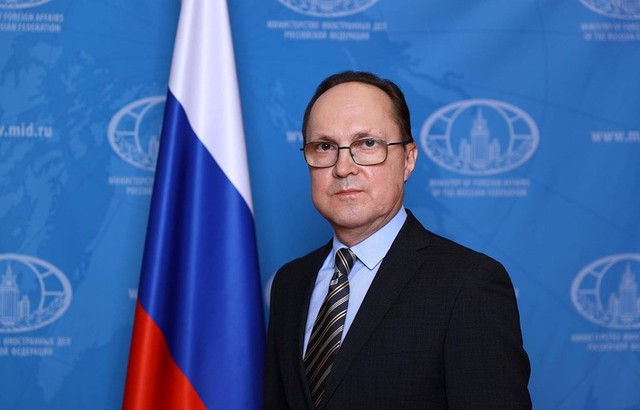
Russian Ambassador to Vietnam Gennady Bezdetko (Photo courtesy of the embassy)
The visit, made at the invitation of Russian Prime Minister Mikhail Mishustin, comes as ties between Viet Nam and Russia continue to grow across multiple fields. Notably, the two countries marked the 75th anniversary of diplomatic relations in 2025, underscoring their long-standing partnership.
Priority areas for stronger cooperation
Russian Ambassador to Viet Nam Gennady Bezdetko expressed confidence that the visit will further reinforce cooperation in priority areas, including the launch of major new projects that could underpin long-term bilateral ties.
He highlighted education and human resource development as a key pillar of the comprehensive strategic partnership, encouraging Vietnamese youth to engage in joint training programs, international competitions, and study opportunities at leading Russian institutions.
Russia also continues to prioritize cooperation with Viet Nam in energy—particularly nuclear power and oil and gas—as well as in science and technology, culture, and tourism. Building on a strong foundation of longstanding collaboration, both sides are expected to explore new drivers of growth to benefit their peoples and contribute to regional and global stability.
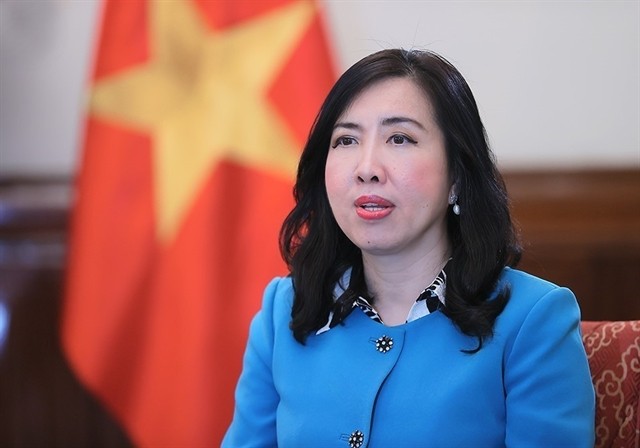
Vietnamese Deputy Minister of Foreign Affairs Le Thi Thu Hang
Bolstering the comprehensive strategic partnership
Vietnamese Deputy Minister of Foreign Affairs Le Thi Thu Hang noted that the visit will reaffirm the enduring traditional friendship and trusted cooperation between the two nations, while injecting momentum to expand ties in both scope and depth with a forward-looking vision.
During the visit, Prime Minister Pham is expected to meet senior Russian leaders, visit economic, scientific, and educational institutions. Both sides will also work to resolve bottlenecks and identify new areas of collaboration.
Key future-oriented sectors include new energy, infrastructure and transport connectivity, high technology, biomedicine, healthcare, and high-quality human resource training—the areas where Russia has strong expertise.
The Prime Minister will also meet the Vietnamese community in Russia, reaffirming the Party and State's consistent policy of protecting the legitimate rights and interests of overseas Vietnamese while strengthening national unity.
According to the Deputy Foreign Minister, Viet Nam–Russia relations have continued to develop steadily, supported by strengthened political trust through frequent high-level exchanges and effective cooperation mechanisms.
Traditional areas such as defense-security, trade, energy, science-technology, and education-training remain robust, while newer fields—including innovation, digital transformation, green transition, and advanced technologies—are gaining traction.
Looking ahead, both sides are encouraged to enhance coordination across Party diplomacy, State diplomacy, and people-to-people exchanges. Greater emphasis should also be placed on cultural cooperation, tourism, and youth exchanges.
She noted that generations of Vietnamese students educated in Russia have made significant contributions to Viet Nam's development, while calling for expanded cooperation in fields where Russia excels, such as digital and quantum technologies, biomedicine, and fundamental sciences.
People-to-people ties will also be strengthened through cultural, artistic, and sporting exchanges, along with regular cultural events in both countries. Following the Vietnamese Cultural Festival at Red Square in 2025, a wide range of science and education activities are planned for 2026.
Tourism cooperation has shown strong recovery and is expected to grow further with improved legal frameworks to facilitate travel.
Le also highlighted the Vietnamese community in Russia—around 80,000 people—as a vital bridge in bilateral relations, contributing positively to both societies.
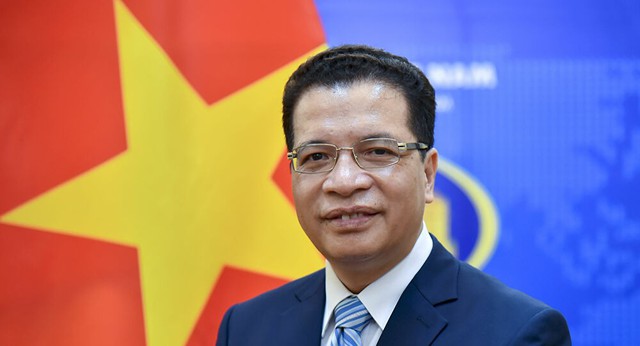
Vietnamese Ambassador to Russia Dang Minh Khoi
Advancing a long-term vision
Vietnamese Ambassador to Russia Dang Minh Khoi said the visit will pave the way for a series of important high-level engagements in 2026, with a focus on strengthening political ties and expanding cooperation in economic and trade sectors.
Particular attention will be given to investment, energy, and oil and gas, especially in the context of the ongoing global energy challenges. He noted that the visit could open up significant new opportunities for both countries.
Overall, high-level meetings during the trip are expected to play a key role in reviewing current relations and setting strategic directions for bilateral cooperation in 2026 and beyond.
Over more than 75 years, the Viet Nam-Russia relations have built a strong, trusted relationship rooted in early diplomatic ties established in 1950 with the former Soviet Union. Key milestones—including the 1994 Treaty on Basic Principles, the Strategic Partnership in 2001, and the Comprehensive Strategic Partnership in 2012—have steadily deepened cooperation across all fields.
Political trust remains high, supported by frequent high-level exchanges, including the 2024 visit by President Vladimir Putin and major commemorations such as the 75th anniversary of diplomatic relations in 2025. Both countries also maintain close coordination in major multilateral forums.
Economic and trade ties have grown steadily, supported by the Vietnam–Eurasian Economic Union Free Trade Agreement, while investment flows in both directions continue to expand. Energy cooperation—especially oil and gas joint ventures—remains a key pillar.
Collaboration in education, science, and technology has reached a strategic level, with thousands of Vietnamese students trained in Russia contributing to national development. Cultural, tourism, and people-to-people exchanges, along with a strong Vietnamese community in Russia, further reinforce bilateral ties.