
WHO calls for strict safeguards on organ donation by minors in Viet Nam
VGP - The World Health Organization (WHO) urged Viet Nam to establish strict safeguards for organ and tissue donation by children aged under 18, stressing that efforts to save lives must go hand in hand with protecting minors from coercion and potential health risks.
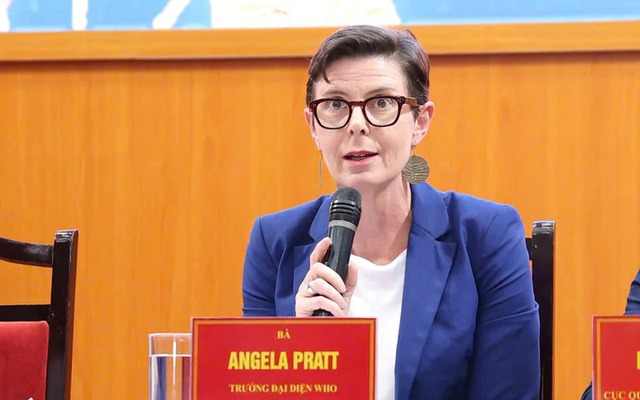
WHO Representative in Viet Nam Angela Pratt made the recommendation at a press briefing on Tuesday afternoon on the draft revised Law on Donation, Removal and Transplantation of Human Tissues and Organs and Donation and Recovery of Cadavers
WHO Representative in Viet Nam Angela Pratt made the recommendation at a press briefing on Tuesday afternoon on the draft revised Law on Donation, Removal and Transplantation of Human Tissues and Organs and Donation and Recovery of Cadavers.
Pratt said WHO supports efforts to expand access to transplantation in line with ethical principles, while emphasizing that donor protection must remain the top priority.
She described organ and tissue donation involving children as a sensitive issue requiring careful consideration and a transparent, equitable and safe system for both donors and recipients.
Children's best interests must come first
WHO recommends that the best interests of children and the highest possible level of protection be the primary considerations in decisions concerning donation by minors.
Pratt stressed the need to distinguish between organ donation after death and living donation.
Donation after death by minors is practiced in some organ donation and transplantation systems worldwide, she said. Living organ donation by minors, however, should only be considered in exceptional circumstances.
For regenerative tissues, such as hematopoietic stem cells, donation between family members may be considered when no suitable adult donor is available. Such cases must meet professional requirements and be subject to strict safeguards.
According to WHO, minors who may donate tissues or organs should receive information appropriate to their age and maturity, be given opportunities to express their views, and have their parents or legal guardians involved in the decision-making process.
Children must also be guaranteed the right to refuse or withdraw consent. Independent counseling and assessment should be provided to prevent family pressure, coercion and commercialization, Pratt emphasized.
WHO considers Viet Nam's draft revised law broadly consistent with its principles and international experience. However, it recommends further improvements, particularly in ensuring that children receive age-appropriate information and give their consent freely and genuinely.
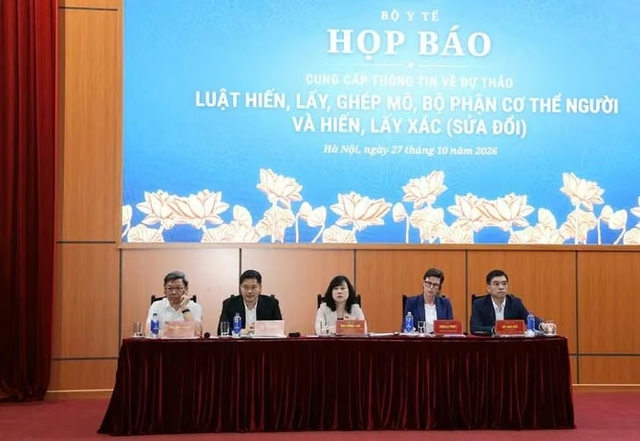
The Ministry of Health hosts a press briefing on the draft revised Law on Donation, Removal and Transplantation of Human Tissues and Organs and Donation and Recovery of Cadavers, Ha Noi, October 27, 2026
Draft law seeks to strengthen protection for child donors
Viet Nam currently regulates organ and tissue donation under legislation that took effect in 2007. After nearly two decades of implementation, the Ministry of Health has identified several shortcomings, particularly regarding age requirements for donors.
Under the existing law, people under 18 are not permitted to register to donate tissues or organs after death.
The ministry has also identified gaps in regulations on blood donation age requirements and safeguards against illegal organ trafficking disguised as donations by living adults.
The proposed amendments seek to address these shortcomings by establishing separate provisions for living and deceased donors under 18.
For living donors, the draft would permit minors to donate only regenerative tissues, such as hematopoietic stem cells, and only under strictly defined circumstances.
Children aged 15 to under 18 could donate regenerative tissues to family members if no suitable adult donor is available. Those under 15 could donate such tissues only to a parent or biological sibling, provided that no compatible adult donor is available.
In all cases, the child must be medically fit, receive independent counseling and agree to the donation. Consent from a parent or legal guardian would also be required.
The draft maintains a prohibition on removing healthy organs, including kidneys, livers, hearts and lungs, from living donors under 18.
The Ministry of Health emphasized that the proposed amendments must not be interpreted as permitting the removal of organs from living children for transplantation.
Rather, the draft aims to establish a legal framework that protects children's best interests while providing a basis for considering appropriate donation cases not covered by existing legislation. It is not intended to encourage organ or tissue donation by minors.
The draft revised law, submitted to the National Assembly for consideration, has drawn attention from lawmakers, experts and the public, reflecting the ethical, medical and legal implications of expanding the scope of donation while safeguarding children's rights and well-being./.