Viet Nam rises from production base to Korean strategic partner
VGP - Korean investors increasingly see Viet Nam not merely as a production hub but as a strategic partner for R&D and technological cooperation, said Kim Nyoun Ho, Chairman of the Korean Chamber of Commerce in Viet Nam (KOCHAM).
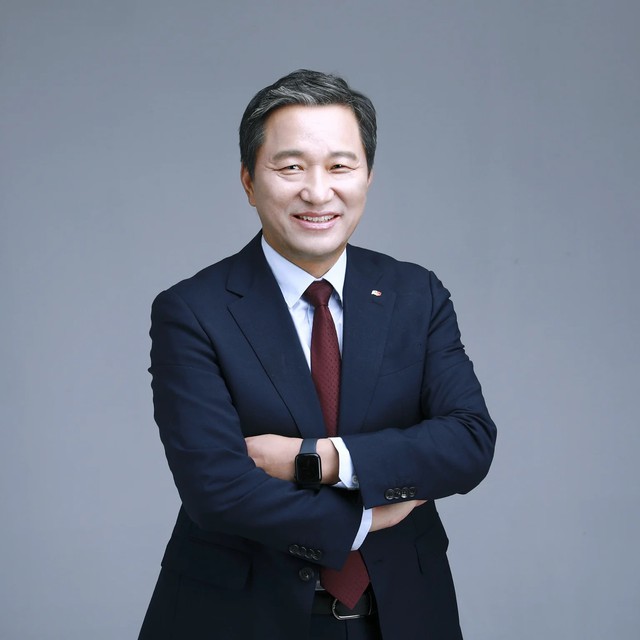
Chairman of the Korean Chamber of Commerce in Viet Nam (KOCHAM) Kim Nyoun Ho
Chairman Kim made the assessment during an interview with VGP ahead of the 2026 New Year on Viet Nam's economic prospects. Hereafter is the full interview.
What are your most impressive observations about Viet Nam in 2025?
Chairman Kim Nyoun Ho: In 2025, Viet Nam proved its "unshakable economic resilience" even amid severe internal and external challenges.
It was a difficult year in which an external crisis—strong pressure from the Trump administration of the United States in the form of so-called "reciprocal tariffs"—coexisted with internal confusion caused by large-scale reforms and restructuring of the national administrative system. However, the Vietnamese Government and businesses wisely overcame these two major challenges and achieved a remarkable economic growth rate approaching 7 percent.
Viet Nam's ability to continue growing without stopping, despite external shocks and internal pains, left Korean investors with a strong impression and firm confidence that "Viet Nam does not collapse under any crisis."
South Korea is currently the largest foreign investor in Viet Nam. What are the key trends of Korean FDI inflows in 2026, and which sectors or projects stand out?
Chairman Kim Nyoun Ho: In 2026, Korean investment in Viet Nam is expected to further accelerate its transition from "quantitative expansion" to "qualitative advancement." Investment is moving away from labor-intensive manufacturing toward sectors such as semiconductors, artificial intelligence (AI), biotechnology, and eco-friendly energy.
In particular, not only large Korean conglomerates but also technologically capable mid-sized and small enterprises will expand their entry into areas such as smart city development, data centers, and high value-added components and materials industries, in connection with Viet Nam's National Digital Transformation Program. Korean investors are recognizing Viet Nam not merely as a production base, but as a "strategic partner" for R&D and technological cooperation.
What are your expectations for Viet Nam's economic outlook and Viet Nam–Republic of Korea relations in 2026?
Chairman Kim Nyoun Ho: The year 2026 will be an important turning point for Viet Nam as it advances toward becoming a middle-income country. In particular, as the reciprocal tariff negotiations with the United States were recently concluded smoothly, the largest uncertainty surrounding external exports has been completely resolved. Based on this stable trade environment, I am confident that Viet Nam will continue to achieve solid growth in the range of 6.5 to 7 percent.
Based on the Comprehensive Strategic Partnership, relations between Viet Nam and Korea will deepen beyond the economy into culture, people-to-people exchanges, and security cooperation. Amid the global restructuring of supply chains, the two countries are indispensable partners to each other, and I hope that in 2026 this economic bond will lead to tangible improvements in the quality of life of the people of both nations.
Do you have any recommendations for improving Viet Nam's investment and business environment for Korean investors?
Chairman Kim Nyoun Ho: While Viet Nam's investment environment is overall very attractive, we strongly request urgent improvements regarding unreasonable issues related to value-added tax (VAT) refunds that Korean companies face in practice.
First is the issue of delayed refunds. Export companies are experiencing serious liquidity difficulties due to tax audits that exceed the statutory deadline and complicated administrative procedures.
Second, an even more serious problem is the "transfer of responsibility to good-faith taxpayers." Recently, there have been cases in which companies that conducted legitimate transactions and properly received tax invoices were asked to return already-refunded VAT or were imposed with heavy penalties solely because their trading partners (suppliers) closed down or absconded. This unfairly shifts the fault of one party onto good-faith companies and seriously undermines business stability.
Accordingly, KOCHAM strongly recommends the following:
- Protection of good-faith companies: Recognize that illegal acts or closure of trading partners are not the responsibility of purchasing companies, and stop unjust refund clawbacks or penalty impositions for legitimate transactions.
- Expansion of "refund first, audit later" and administrative standardization: Along with prompt refunds for compliant companies, please unify tax administration practices that currently differ by region to create a predictable business environment.
If fairness in tax administration is ensured, Korean investment in Viet Nam will increase even more significantly in 2026.
How do you assess the Vietnamese Government's performance during the 2021–2025 term? What are the most notable achievements?
Chairman Kim Nyoun Ho: The past five years were a "miraculous period" in which the COVID-19 pandemic and global economic crises were overcome. The Vietnamese Government's greatest achievement is undoubtedly its "pragmatic and flexible bamboo diplomacy."
In particular, the successful conclusion of reciprocal tariff negotiations with the Trump administration of the United States, which advocated protectionism, was a remarkable achievement that demonstrated the Vietnamese Government's outstanding diplomatic capabilities to the world. As a result, many global companies, including Korean enterprises operating in Viet Nam, were able to escape tariff risks and continue stable production and exports.
In addition, bold infrastructure expansion projects, such as the opening of the North–South Expressway and the advancement of Long Thanh International Airport, are also evaluated as decisive achievements that have elevated Viet Nam's national competitiveness to the next level.
I sincerely wish the Vietnamese Government and all Vietnamese people health and good fortune in the New Year of 2026.
Thank you!
