Viet Nam puts foward key proposals to respond to energy crisis at ASEAN Summit
VGP - Vietnamese Prime Minister Le Minh Hung put forward three key proposals for ASEAN as the bloc faces an increasingly insecure and uncertain strategic environment while addressing the retreat session of the 48th ASEAN Summit in Cebu, the Philippines, on May 8.
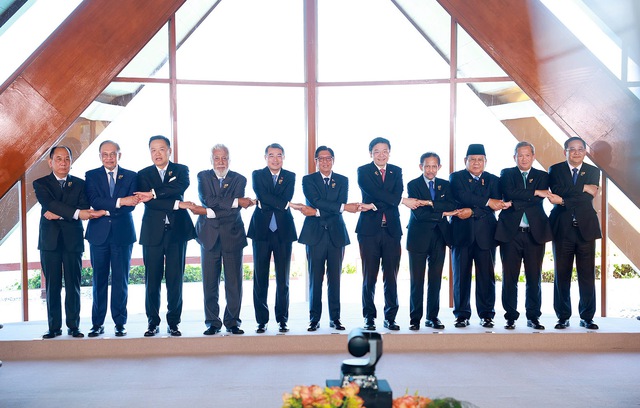
Leaders of ASEAN Member States to the 48th ASEAN Summit in Cebu, the Philippines, May 8, 2026. Photo: VGO
The retreat focused on responses to the energy crisis arising from geopolitical tensions and lessons for ASEAN.
First, ASEAN should take the lead in upholding rules and strengthening trust in international relations by consistently promoting multilateralism and respect for international law, he said. Accordingly, ASEAN should actively contribute to maintaining security, safety, and freedom of navigation and overflight globally and in the region.
Regarding the East Sea, ASEAN should work together with China to ensure the full and effective implementation of the Declaration on the Conduct of Parties in the East Sea (DOC), and soon conclude an effective and substantive Code of Conduct in the East Sea (COC) in line with international law, particularly the 1982 United Nations Convention on the Law of the Sea (UNCLOS), according to the agreed roadmap, the PM stressed.
Second, amid a volatile world, ASEAN should anticipate changes by proactively preventing and managing crises. Drawing lessons from the Middle East, PM Hung proposed that the bloc make more effective use of existing mechanisms, especially cooperation frameworks with partners, to promote dialogue, build trust, and advance preventive diplomacy.
The dispute settlement mechanisms and instruments under the ASEAN Charter and the Treaty of Amity and Cooperation (TAC) should also be utilised more effectively to foster dialogue and seek solutions to differences, he noted.
Third, enhancing strategic autonomy and promoting ASEAN centrality are the only ways for the bloc to remain resilient and overcome current multidimensional challenges. Amid major-power competition and pressure to choose sides, ASEAN needs to further strengthen solidarity, unity, and balanced engagement with partners.
ASEAN must maintain its central role in shaping agendas at ASEAN-led mechanisms while continuing to expand development space through stronger external relations with potential partners, he said.
At the retreat session, ASEAN leaders shared concerns over the profound and wide-ranging impacts of recent complex geopolitical developments, particularly the conflict in the Middle East, on the region. To address the impacts of the crisis, they agreed on the need to strengthen solidarity and step up cooperation to enhance strategic autonomy.
At the same time, ASEAN needs to speak with a stronger common voice on key international issues, including security, safety, and freedom of navigation and overflight with the aim of ensuring regional peace, security, stability, and development, they said./. VNA