Viet Nam, China hold 17th meeting of Steering Committee for Bilateral Cooperation
VGP - Viet Nam and China vowed to strengthen strategic trust, enhance all-level exchanges, improve the effectiveness of cooperation across various sectors, expand local-to-local cooperation and people-to-people exchanges, and step up collaboration at multilateral forums.
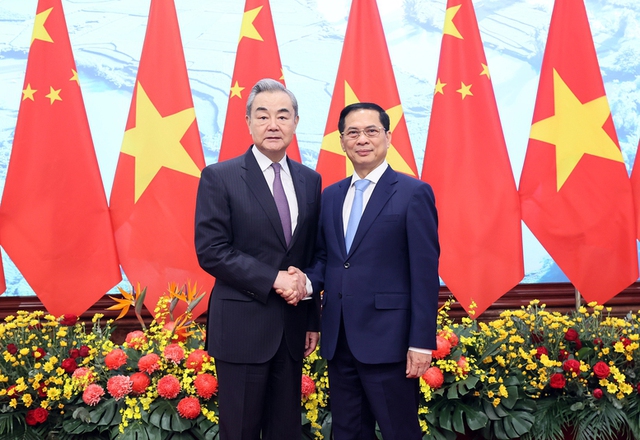
Deputy Prime Minister Bui Thanh Son (R) and Minister of Foreign Affairs Wang Yi co-chair the 17th meeting of the Viet Nam–China Steering Committee for Bilateral Cooperation, Ha Noi, March 17, 2026 - Photo: VGP
Deputy Prime Minister Bui Thanh Son and Minister of Foreign Affairs Wang Yi co-chaired the 17th meeting of the Viet Nam–China Steering Committee for Bilateral Cooperation which took place in Ha Noi on March 17.
The two sides agreed on various measures to effectively implement the shared perceptions of their senior leaders, striving to bring the bilateral relations into a new phase of development towards a more effective and substantive manner.
Both sides hailed the positive achievements in the bilateral ties, remarkably China remains Viet Nam's largest trading partner, while Viet Nam is China's fourth-biggest trading partner.
The Vietnamese Deputy Prime Minister suggested both sides speed up the establishment of intergovernmental working groups in key areas, give high priority to railway cooperation, and soon complete three standard-gauge railway projects connecting the two countries.
The host proposed China open the market for Vietnamese agricultural and aquatic products such as seafood and pomelo, soon resume import of Vietnamese spiny lobster, and foster stronger ties on standards.
The Deputy Prime Minister expressed his hope that both sides would promote high-quality and high-tech investment of China in Viet Nam, accelerate the resolution of obstacles in aid projects, and boost cooperation in energy infrastructure and border gates, including increasing the capacity and volume of electricity imports from China, ensuring fuel supply, expanding the smart border gate model, and developing cross-border economic cooperation zones.
He emphasized the need to enhance collaboration in agriculture, environment, finance and banking, science and technology, healthcare, and people-to-people exchanges; develop and implement the plan for Viet Nam-China Tourism Year for 2026-2027; and increase scholarships for Vietnamese students studying in China.
Bui said that both sides should put themselves in each other's shoes, respect each other's sovereignty and legitimate interests in accordance with international law, especially the 1982 United Nations Convention on the Law of the Sea (UNCLOS); continue to promote role of maritime negotiation mechanisms and accelerate the conclusion of an efficient and substantive Code of Conduct in the East Sea (COC).
Wang, for his part, reiterated that China attaches importance to enhancing mutually beneficial cooperation with Viet Nam, stands ready to share development opportunities, and supports Viet Nam in building an independent and self-reliant economy.
China is also willing to expand import of high-quality goods, especially agricultural products, and promote more balanced trade, underlined the guest.
China will actively advance the implementation of the three railway projects, help Viet Nam train workforce for the railway sector, and encourage Chinese enterprises to expand investment in Viet Nam, said the top Chinese diplomat.
Wang suggested that both sides strengthen cooperation in emerging fields such as high technology, innovation, and clean energy, as well as people-to-people exchanges, culture, healthcare, and education, affirming that China will provide more scholarships for Vietnamese students in diverse forms.
The two sides held frank discussions on maritime issues and agreed to continue serious implementation of the common perceptions reached by the two countries' senior leaders, better manage and resolve differences, and maintain peace and stability in the East Sea./.