
Regional minimum wages to rise by 7.8 percent from 2027
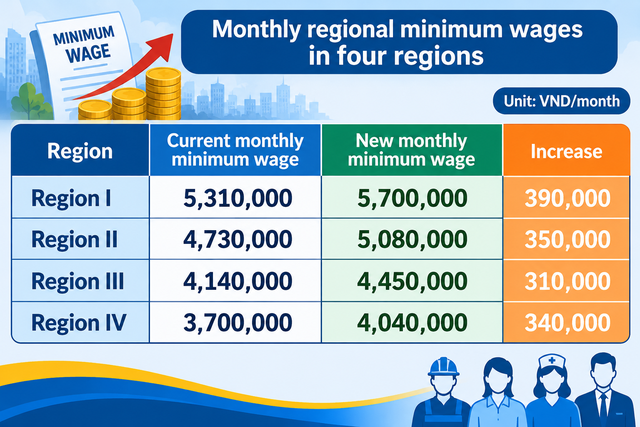
VGP - Regional minimum wages shall increase by 7.8 percent, or VND310,000-VND 390,000, per month from January 1, 2027, according to the Government's Decree No. 399/2026/ND-CP.
Specifically, monthly minimum wage will increase to VND5.7 million in Region I; VND5.08 million in Region II; VND4.45 million in Region III; and VND4.04 million in Region IV.
The decree also stipulates new hourly minimum wages of VND27,400 in Region I; VND24,400 in Region II; VND21,400 in Region III; and VND19,400 in Region IV.
Regarding the geographical scope of application, the decree specifies that employers shall apply the minimum wage corresponding to the area where they operate.
Viet Nam's regional minimum wage system divides the country into four geographical areas – Region I, Region II, Region III and Region IV – based on differences in socio-economic development, living costs and labor market conditions.
Region I covers major urban centers and areas with the highest levels of economic development, while Region II comprises other developed cities and industrial hubs.
Region III includes areas with relatively developed economies and growing industrial and service sectors, while Region IV mainly covers less-developed areas with lower living costs.
The classification serves as the basis for determining minimum wage levels applicable to employees working under labor contracts, with Region I having the highest minimum wage and Region IV the lowest.