
THE SOCIALIST REPUBLIC OF VIET NAM
Government News
Viet Nam shifts mindset from treatment to proactive prevention in children health protection
VGP - To reduce the disease burden, we must shift our mindset from focusing on treatment to proactive prevention, said Prof. Tran Minh Dien, Director of the Viet Nam National Children’s Hospital and President of the Viet Nam Pediatric Association.
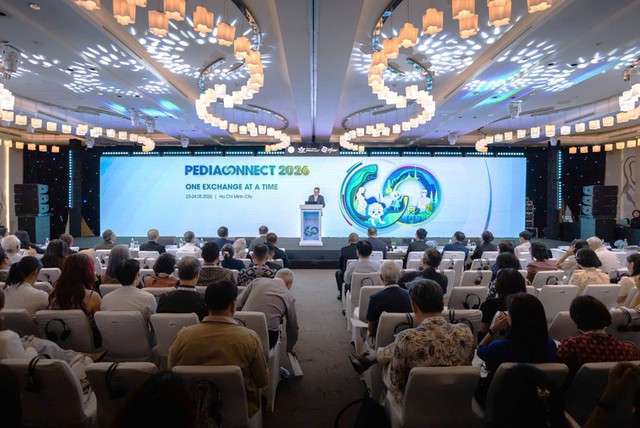
Overview of the International Symposium PediaConnect 2026 with a topic “Advances in prevention of respiratory-transmitted infections in children”.
Tran made the suggestion at the International Symposium PediaConnect 2026, themed "Advances in prevention of respiratory-transmitted infections in children."
The event took place from May 23-24, 2026, in Ho Chi Minh City, targeting to update scientific data and share practical insights on enhanced prevention strategies against three critical respiratory pathogens in children, including pneumococcus, meningococcus and Respiratory Syncytial Virus (RSV).
The symposium was co-organized by Pfizer Viet Nam, the Viet Nam Pediatric Association, and the Viet Nam National Children's Hospital.
It comes at a critical time as these pathogens continue to be recognized as dangerous, highly contagious causes of infectious diseases, posing a substantial burden on both pediatric health and the public healthcare system. Climate change, urbanization and air pollution are drivers behind the rise and growing complexity of respiratory infections.
Amid these compounding factors, young children - whose immune systems are still developing - face the highest vulnerability and higher risk of developing severe complications3, ultimately multiplying the strain on the public healthcare system.

Prof. Tran Minh Dien, MD, PhD - Director of Viet Nam National Children’s Hospital; President of Viet Nam Pediatric Association - emphasized the importance of reducing the burden of respiratory diseases in children through proactive prevention.
Disease burden and the gap in disease management
Among the diseases discussed, experts expressed profound concern over pneumococcus, as it remains not only the leading cause of bacterial pneumonia but can also lead to severe invasive pneumococcal diseases (IPD) in young children such as sepsis and meningitis.
In severe cases, IPD can result in respiratory failure, multi-organ failure and the need for hospitalization. Certain cases of pneumococcal meningitis can be fatal very rapidly since the onset of symptoms.
Furthermore, IPD can leave behind devastating, long-term sequelae and damage, including impaired lung function, brain damage, cognitive impairment, and hearing loss9.
From an epidemiological perspective, PhD Phan Huu Phuc, Deputy Director of Viet Nam National Children's Hospital, General Secretary, Viet Nam Pediatric Association stated: "Currently, the epidemiological landscape of pneumococcus is undergoing significant changes, data from multiple Southeast Asian countries, including Viet Nam, have recorded serotype replacement due to the prevalence of strains falling outside the coverage of previous pneumococcal vaccines.
In Viet Nam, a three-year study conducted at Viet Nam National Children's Hospital identified 18 pneumococcal serotypes causing IPD in children. In addition, respiratory syncytial virus (RSV) is one of the leading causes of morbidity and mortality among infants under 6 months of age, particularly in low- and middle-income countries. RSV imposes a substantial long-term healthcare burden. Early and effective preventive interventions are needed in children to minimize the impact of RSV."
In response to this reality, Prof. Tran Minh Dien emphasized: "To reduce the disease burden, we must shift our mindset from focusing on treatment to proactive prevention, as well as strengthen epidemiological surveillance and raise public awareness about respiratory infectious diseases, especially in children".
Antibiotic resistance in pneumococcus has also emerged as a concerning issue. Hospitals across Viet Nam have recorded pneumococcus resistance to common antibiotics, including multidrug resistance, leading to complicated treatment, higher treatment costs and prolonged treatment duration.
Beyond the individual burdens, pneumococcus can also co-infect with RSV - a leading virus causing bronchiolitis in infants and young children. This RSV-pneumococcal co-infection can lead to prolonged hospital stays or require intensive care unit admission.
In addition, meningococcal meningitis was highlighted as a highly dangerous disease capable of progressing exceptionally fast and carrying a high risk of mortality within a short time. Beyond infants and young children, adolescents are also viewed as a notable high-risk group, as they can inadvertently become 'carriers' transmitting the bacteria within the community, particularly in school environments and crowded spaces.
Promote proactive prevention and enhance multidisciplinary collaboration
Beyond updating clinical data, PediaConnect 2026 served as a vital forum for sharing international experience in pediatric respiratory disease prevention. According to Assoc. Prof. Nusrat Homaira: "Pneumococcal disease, meningococcal disease and RSV in children are not merely medical burdens, they also inflict long-term impacts on families, education and society across Southeast Asia. Therefore, awareness campaigns and multidisciplinary collaborations aimed at Beyond updating clinical data, PediaConnect 2026 served as a vital forum for sharing international experience in pediatric respiratory disease prevention.
According to Assoc. Prof. Nusrat Homaira: "Pneumococcal disease, meningococcal disease and RSV in children are not merely medical burdens, they also inflict long-term impacts on families, education and society across Southeast Asia. Therefore, awareness campaigns and multidisciplinary collaborations aimed at strengthening disease surveillance, improving access to appropriate preventive measures must be continuously deployed in a coordinated manner to build a stronger healthcare foundation for children in every nation".
Concluding PediaConnect 2026, experts reached a consensus that amid the escalating burden of respiratory infections in children, driving proactive prevention and strengthening multidisciplinary collaboration will play an increasingly vital role in protecting public health. The symposium also featured the growing need to enhance scientific data sharing, bridge real-world experiences across nations, and stimulate professional dialogue to support the development of preventive strategies tailored to the shifting epidemiological landscape.
As a specialized perspective from Viet Nam, Prof. Phan Trong Lan - Director of the National Institute of Hygiene and Epidemiology remarked: "One of the important values of symposium as PediaConnect is creating opportunities for both domestic and international experts to share data, real-world experiences and novel approaches to infectious disease prevention. These multi-dimensional exchanges not only contribute to updating expertise but also support stronger integration between preventive measures and clinical care to protect children from multiple dangerous diseases".
As a co-organizer of the symposium series, Pfizer Viet Nam reaffirmed its long-term commitment to partnering with the medical community to strengthen pediatric respiratory disease prevention. At the event, Mr. Mark Kuo - Country Manager of Pfizer Viet Nam and Thailand, articulated: "Through PediaConnect 2026, Pfizer is deeply committed to serving as a trusted partner to the healthcare systems in Viet Nam and the ASEAN region, working alongside healthcare professionals to foster scientific dialogue, update medical data, and exchange practical experience in pediatric preventive medicine. We envision that this collaboration will contribute to elevating preventive healthcare capacity, expanding appropriate access to medical advancements, ultimately striving toward a healthier generation of children in Viet Nam./.