
THE SOCIALIST REPUBLIC OF VIET NAM
Government News
Viet Nam introduces new five-tier household electricity tariff
VGP - From November 1, 2026, Viet Nam began to apply five-tier household electricity, replacing its previous six-tier structure.
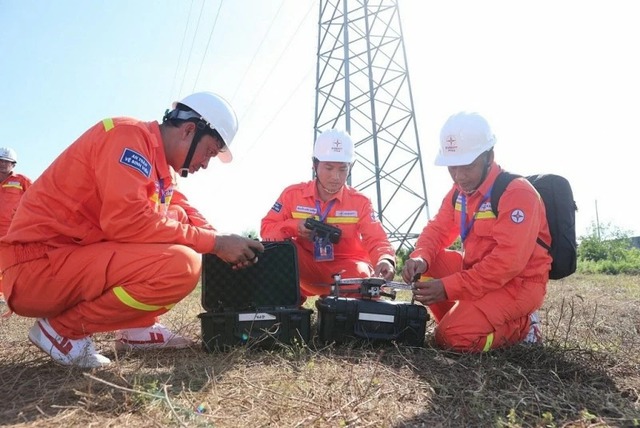
The new retail electricity tariff takes effect from November 1, 2026.
Accordingly, residential electricity tariffs shall be calculated according to five consumption brackets as follows:
Tier | Consumption Bracket | Price (VND/ kWh)* | Approximate Price (USD/ kWh) |
Tier 1 | 0 – 100 kWh | VND 1,901 | $0.072 |
Tier 2 | 101 – 200 kWh | VND 2,289 | $0.087 |
Tier 3 | 201 – 400 kWh | VND 2,894 | $0.110 |
Tier 4 | 401 – 700 kWh | VND 3,456 | $0.131 |
Tier 5 | Above 700 kWh | VND 3,844 | $0.146 |
The highest tariff, at VND 3,844 per kWh, is more than twice the lowest rate of VND 1,901 per kWh.
In another move, Viet Nam has cut average retail electricity price by 2 percent, applicable from November 1, 2026, March 31, 2027.
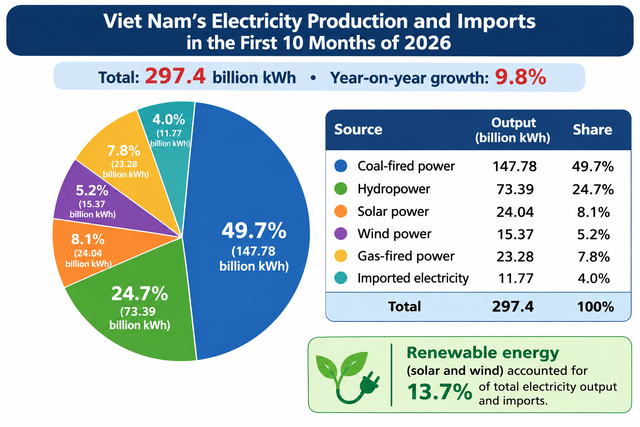
Photo with AI support
Viet Nam's total electricity production and imports stood at 297.4 billion kWh in the first ten months this year, an increase of 9.8 percent year on year.
Coal-fired power accounted for the largest share of the electricity mix in the reviewed period, generating 147.78 billion kWh, or 49.7 percent of the total.
Hydropower contributed 73.39 billion kWh (24.7 percent), while renewable energy sources generated 40.72 billion kWh (13.7 percent).
Solar power accounted for 24.04 billion kWh and wind power 15.37 billion kWh. Gas-fired power generation reached 23.28 billion kWh, representing 7.8 percent, while imported electricity totalled 11.77 billion kWh, or 4 percent.
Electricity transmitted across the national grid was estimated at 239.23 billion kWh in the first 10 months, up 11.2 per cent year-on-year./.