
THE SOCIALIST REPUBLIC OF VIET NAM
Government News
UNESCO, Japan help strengthen early warnings capacity in Nghe An
VGP - The UNESCO in Viet Nam and the Japanese Government on Thursday signed an agreement on launching the project on strengthening capacity of Viet Nam for early warnings, disaster risk reduction and safer learning environments.
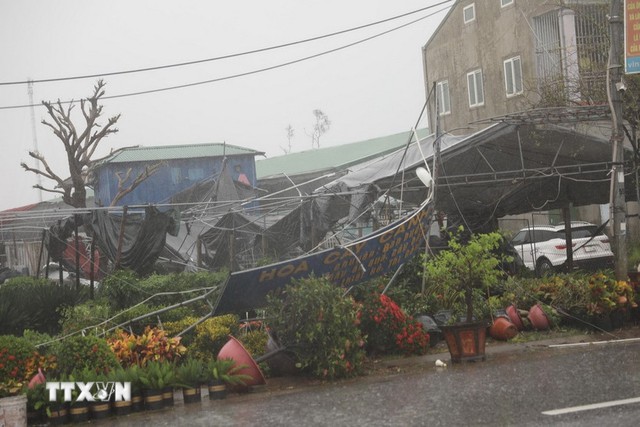
Vinh Phu district in Nghe An Province is destroyed by storm No.10 in 2025 - Photo: VNA
The project, worth over US$533,000, will be carried out in the central province of Nghe An from March 2026-March 2027.
The one-year project aims to enhance near-real-time early warning systems and local preparedness capacity to ensure school safety and education continuity in emergencies
The project seeks to address critical gaps in near-real-time monitoring, early warning dissemination, and local response capacity. It also aims to strengthen the preparedness and resilience of schools to protect learners and ensure the continuity of education in emergency situations.
UNESCO manages the project in close partnership with national and local stakeholders, drawing on international technical expertise to ensure interventions are risk-based and community-centered.
Through these interventions, approximately 15,000 people, including community members, students, teachers and school leaders, are expected to benefit directly, with many more indirectly benefiting.
In 2025, Viet Nam experienced a series of disasters including severe typhoons, flash floods, landslides, and mudflows, which disproportionately affected the northern and central regions.
Typhoon Wipha (July 2025) alone caused extensive damage in the central province of Nghe An, with over 3,700 houses flooded, hundreds damaged, thousands of households displaced, and significant losses to infrastructure and livelihoods.
In several inland communes, river levels exceeded historical records, submerging entire communities before warnings could be issued due to limited near-real-time monitoring capacity./.