
THE SOCIALIST REPUBLIC OF VIET NAM
Government News
Int’l media highlights Viet Nam’s rising role in global supply chains
VGP - International media agencies, including Reuters, AFP and NHK, have highlighted Viet Nam as one of Asia’s strongest growth performers and an increasingly important player in global supply chains.
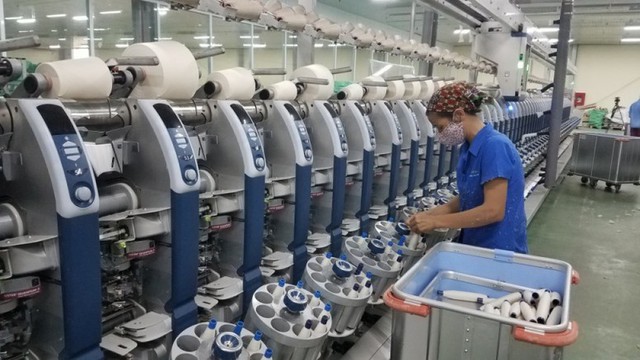
Viet Nam is regarded as one of Asia’s strongest growth performers and an increasingly important player in global supply chains.
Official data show the Vietnamese economy expanded 8.02 percent in 2025, ranking among the fastest-growing economies worldwide despite global trade headwinds such as protectionism, higher logistics costs and supply-chain disruptions.
Viet Nam's performance is particularly notable at a time when global trade is under pressure from rising protectionism, higher logistics costs and ongoing supply-chain disruptions.
Viet Nam has managed to sustain strong momentum through a relatively balanced combination of exports, domestic consumption and public investment, reflecting a more diversified and resilient growth model.
Jochen Schittmann, the International Monetary Fund's regional resident representative, said Viet Nam has continued to show strong determination to deepen its integration into the global economy despite heightened trade volatility. He cautioned that increasing trade barriers and tariffs pose challenges for maintaining high growth in highly open economies such as Viet Nam, but also highlighted the country's ambitious and wide-ranging structural reform agenda. Under the IMF's scenario analysis, effective implementation of these reforms could lift Vietnam's growth by around two percentage points above the baseline.
Reuters placed particular emphasis on Viet Nam's expanding footprint in global supply chains, especially in electronics, textiles and garments, footwear, and high-tech equipment—sectors that are deeply embedded in regional and global production networks.
Domestic factors also played a significant role in supporting growth in 2025. Industrial output and construction rose by nearly 9 percent, the services sector expanded by more than 8.5 percent, and retail sales and household consumption continued to increase. Public investment in infrastructure remained robust, helping to stabilize economic activity while enhancing logistics capacity, connectivity and longer-term growth potential.
NHK, Nikkei Asia and The Daily Star have further commended Viet Nam for maintaining macroeconomic stability throughout the year. Inflation was kept at around 3.3 percent, within the government's target range, while disbursed foreign direct investment rose by 9% to over US$27 billion, reflecting sustained investor confidence in the country's medium- and long-term prospects.
International coverage has also drawn attention to a qualitative shift in Vietnam's growth trajectory. Rather than relying mainly on low-cost advantages, Vietnamese products are increasingly meeting stricter requirements on technical standards, environmental compliance, traceability and sustainability—factors widely seen as critical for maintaining access to major markets as regulatory barriers tighten.
Michael Kokalari, Chief Economist at VinaCapital, said he remains cautiously optimistic about GDP prospects for the coming year, pointing to a clear improvement in consumer sentiment.
Since mid-2025, confidence has gradually recovered and stabilized. Although household savings have yet to return to previous levels, a rebuilding trend is evident. Retail sales are currently growing at around 7 percent annually, largely supported by the recovery in tourism. With firmer confidence and supportive macroeconomic conditions, domestic consumption growth could return to about 8 percent next year, providing a meaningful boost to GDP without the need for short-term or exceptional policy measures.
At the same time, international institutions, including the IMF, warn that the outlook for 2026 remains subject to external risks, particularly a potential global economic slowdown and shifts in international trade policies. Against this backdrop, Viet Nam's ambitious growth targets for the 2026–2030 period are widely seen as a crucial test of its efforts to rebalance the economy toward greater sustainability and self-reliance./.