
THE SOCIALIST REPUBLIC OF VIET NAM
Government News
INCHAM backs Viet Nam’s ambition for double-digit growth
VGP - Comprehensive institutional reform, workforce upgrading, and infrastructure development will be critical for Viet Nam to achieve sustainable double-digit economic growth in 2026, according to the Indian Business Chamber in Ha Noi (INCHAM).
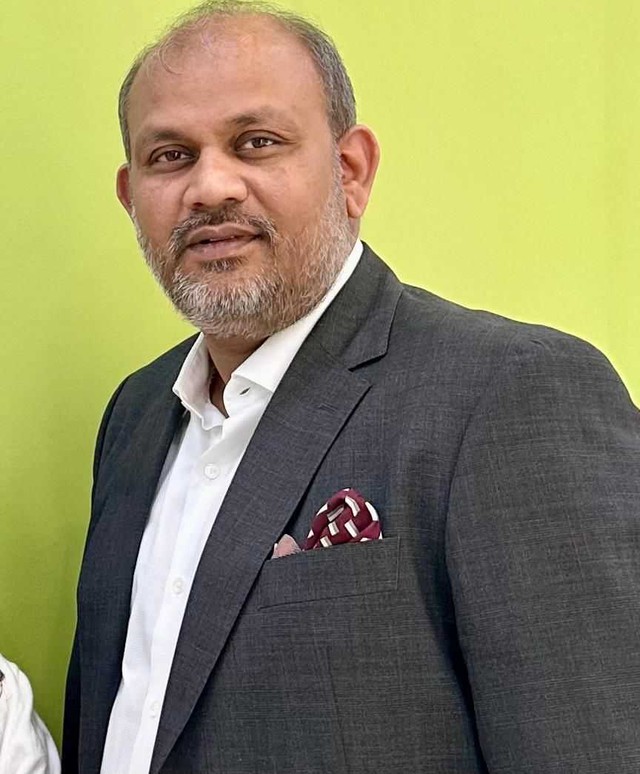
Chairman of Indian Business Chamber in Viet Nam – Ha Noi Branch (INCHAM Ha Noi) Navendu Kumar
Chairman of Indian Business Chamber in Viet Nam – Ha Noi Branch (INCHAM Ha Noi) Navendu Kumar made the assessment while speaking about Viet Nam's ambition to attain growth of 10 percent or higher in the 2026-2030 period.
Central engine for growth
Navendu Kumar said that Viet Nam has set an ambitious target of double-digit growth. From our perspective at INCHAM, this goal represents a strategic move to escape the middle-income trap and to enter a higher development trajectory. For such growth to be sustainable over the long term, we see these three foundational conditions are necessary.
First, comprehensive institutional reform must be the central engine. What most of our investors are struggling today is no longer a lack of capital or ideas, but high institutional costs: prolonged administrative procedures, legal overlaps, and inconsistency between central and local policies. Substantial reform is needed to reduce the operating costs of the economy while concentrating resources on key localities and sectors with the highest absorption capacity.
Second, workforce quality and productivity are where we need to improve. Viet Nam can no longer rely on the old model of low-cost labor. With the workforce expanding slowly today, much slower than two decades ago, and even projected to shrink in the years ahead. It is essential that we have to improve the working efficiency. Viet Nam needs a high-quality workforce with specialized skills for advanced manufacturing, digital technologies, and green industries to achieve the double-digit economic growth.
Third, energy security and logistics infrastructure must be ready to support rapid expansion. Double-digit growth will inevitably strain existing power grids, ports, and highways. Investing in renewable energy capacity and logistics connectivity between industrial zones is not just desirable but essential.
If these prerequisite conditions are met, we at INCHAM are confident that Viet Nam's ambition is achievable.
Advantages for breakthrough growth
In today's challenging global environment – marked by supply chain disruptions, geopolitical tensions, and financial uncertainty – Viet Nam possesses several distinct advantages.
First, political stability and clear strategic direction. The government has formally committed to this growth path, with a comprehensive roadmap with a comprehensive roadmap backed by strong political support at the highest level. This policy certainty gives international investors' confidence.
Second, a proven track record of resilience. Viet Nam's economy demonstrated remarkable strength during 2021–2025, maintaining macroeconomic stability and outperforming most regional peers despite global headwinds.
Third, strategic location and deep trade integration. Viet Nam sits at the heart of Southeast Asia, offering easy access to both its own market and the wider ASEAN region. Through its network of FTA with major economies like the EU, Japan, and the UK, Viet Nam gives manufacturers a competitive edge – products made here can enter key global markets with low or zero tariffs. For Indian businesses, this means turning Viet Nam into a strategic export hub, not just a production base.
Fourth, a young, dynamic workforce with strong digital adoption.
Fifth, the Viet Nam-India Comprehensive Strategic Partnership – now entering its 10th year and elevated to an "Enhanced Comprehensive Strategic Partnership" following President To Lam's recent visit – provides Indian investors with political backing that reduces perceived country risk.
As has been emphasized by senior Vietnamese leaders, for Viet Nam to achieve rapid and sustainable growth, it must adopt a new mindset, a new vision, and a new attitude, supported by the highest political determination. We see this commitment clearly.
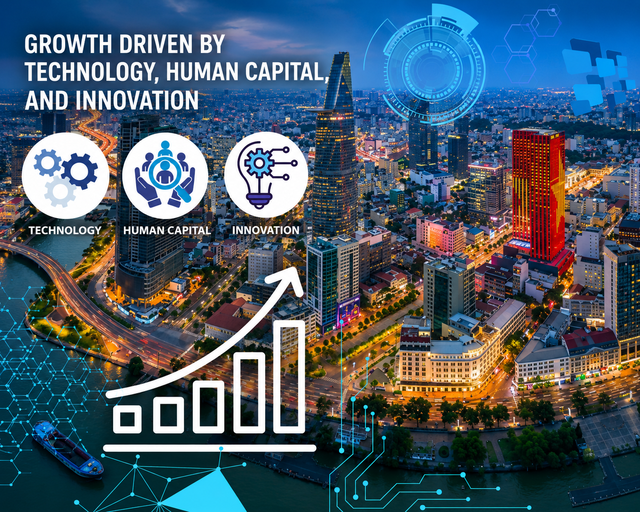
Expect for Viet Nam's new growth model
The Indian business community welcomes Viet Nam's transition from the old economic model – which relied heavily on low-cost labor, FDI, and public investment – to a new strategy grounded in robust institutional frameworks, advancements in science and technology, and a high-quality workforce. This shift aligns well with India's own development trajectory.
Our expectations are threefold:
First, recognition of the private sector as a primary growth engine. This is a new direction in Viet Nam's policy thinking, and Indian businesses are ready to be active partners.
Second, a capable and enabling State – a government that acts as a facilitator for businesses, not a barrier. To achieve rapid development, the government must be professional, transparent, and accountable. What we hope to see in practice in faster approval processes, clearer regulations, and consistent enforcement across provinces.
Third, inclusive institutional frameworks that balance control with incentives for innovation, protect property rights, and foster creativity. Viet Nam is shifting from a "management-oriented" government to a "development-enabling" one, which is a transformation we strongly support.
Beyond these broad expectations, Indian businesses are particularly interested in priority sectors: pharmaceuticals, renewable energy, digital economy, electronics, and agricultural processing. Viet Nam's emphasis on new growth drivers – including digital transformation and green development – aligns well with India's capabilities.
Major obstacles to growth
Navendu Kumar took the occasion to brief daily feedbacks from INCHAM's members with four major bottlenecks.
First, regulatory inconsistency across provinces. A business's experience often depends entirely on where it locates. Some provinces process investment registration certificates in 30 days; others take eight months or longer. Central policies are often good, but implementation varies significantly.
Second, complex work permit and visa procedures for foreign professionals. Indian companies frequently need to bring technical experts, quality control managers, and project supervisors to Viet Nam. The current process requires multiple documents and can take months, with permits often issued for only one year, requiring expensive renewals.
Third, difficulty accessing long-term financing. Many Indian SMEs in Viet Nam do not have local credit histories, and local banks typically require collateral that new investors do not yet have.
Fourth, inconsistent legal enforcement. While Viet Nam's legal framework has improved significantly, legal regulations remain contradictory in some areas, creating compliance burdens that hinder innovation and growth. The practice of "translating" laws into sub-laws often distorts the original spirit, making it difficult for businesses to operate.
These bottlenecks are not insurmountable. Addressing them through systematic institutional reform would immediately boost investor confidence and productivity.
INCHAM's recommendations
From our perspective, there are several practical policy actions that would help Viet Nam reach its 10 percent growth target.
One, implement nationwide standardization of investment processing times. The government could establish maximum allowable timelines for investment registration, land allocation, and construction permits, with transparent tracking mechanisms.
Two, simplify visa and work permit procedures for priority sectors. For industries such as pharmaceuticals, electronics, semiconductors, and renewable energy, a streamlined "fast-track" visa regime with two-year validity would significantly reduce administrative burden.
Three, accelerate digital transformation of government services. The shift from pre-approval mechanisms to effective post-supervision models should be implemented across all provinces. A unified digital platform for investment-related licensing would reduce processing time and increase transparency.
Four, we need to protect and encourage public officials who take initiative. When officials are given clear legal safeguards for decisions made in good faith, they will no longer be paralyzed by the fear of making mistakes. This fear currently causes unnecessary delays.
As has been emphasized, institutional reform must go together with administrative reform and stronger enforcement capacity. This includes a thorough review of administrative procedures to reduce both time and compliance costs. These are exactly the directions we support.
Active partner in Viet Nam's growth story
Navendu Kumar said that INCHAM is fully committed to being an active partner in Viet Nam's growth story. We plan to contribute in several concrete ways:
First, establishing a mentor program for new Indian investors. Smaller companies often hesitate because they lack local knowledge. Our experienced members will guide newcomers through registration, legal compliance, recruitment, and supplier sourcing.
Second, promoting Viet Nam aggressively in Indian business forums. INCHAM leaders regularly speak at major Indian industry conferences, highlighting Viet Nam's investment potential and reforms. We will also publish an annual "Viet Nam Investment Guide" in English and Hindi.
Third, supporting workforce development through partnerships with Vietnamese and Indian training institutions. Recently, INCHAM partnered with the University of Social Sciences and Humanities (USSH) to launch an internship program within our member network, giving students direct exposure to Indian businesses in Viet Nam.
Finally, exploring financial facilitation – encouraging Indian financial institutions to create dedicated credit lines for Viet Nam-focused Indian enterprises and supporting direct VND-INR payment mechanisms.
Viet Nam's goal of 10 percent growth is ambitious, but as has been stated by the country's leadership, substantive growth must be formed from both top-down and bottom-up forces across every sector of the economy. INCHAM is ready to contribute our capital, expertise, and network to make this vision a reality./.