
Legislature to approve new land law this year
VGP – The National Assembly will deliberate on amendments and supplementation to the land law in August and approve the law in October this year, according to Standing Deputy Prime Minister Pham Gia Tuc.
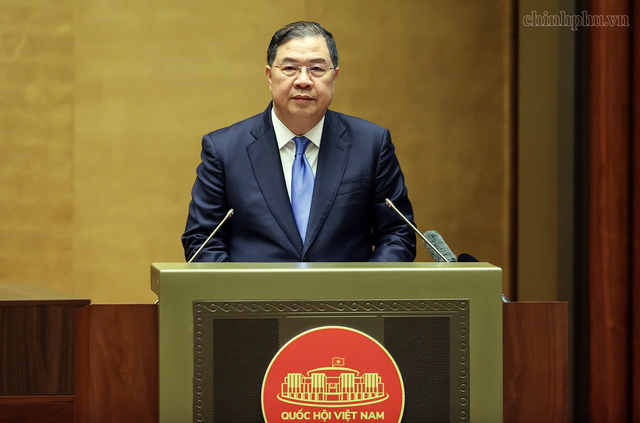
Standing Deputy Prime Minister Pham Gia Tuc
The Deputy Prime Minister made the above statement on Wednesday while briefing about the major contents of Resolution No. 21 adopted at the 3rd plenum of the 14th Central Committee of the Communist Party of Viet Nam.
The Resolution affirms that land is under the ownership of the entire people, with the State acting as the owner's representative and uniformly managing it.
The Resolution strictly affirms that there shall be no privatization of land and no foreign individuals shall be allowed to acquire land use rights under any form, except for people of Vietnamese origin residing abroad as prescribed by law.
The State exercises its rights as the owner's representative through determining land use master plans and plans; land recovery; land allocation, land lease, and recognition of land use rights; permitting changes of land use purpose; stipulating land use terms; deciding on land prices, land financial policies.
The allocation, management, and use of land must ensure fairness, efficiency, and the avoidance of wastefulness.
The Resolution also affirms that land use rights are a special type of asset and commodity, but not ownership rights, and serve as an important input factor of the economy.
Land use rights and assets attached to land are protected by law. The State shall not reconsider lawful land use rights established under land policies and laws through various periods.
Regarding land use master plans and plans, the Resolution requires innovating planning mindsets towards uniformity and synchronization with national master plans, regional, provincial, urban, and rural plans.
The national land use master plan must ensure the strict allocation and management of land areas for national defense, security, rice-farming, and forestry.
The Resolution also demands the efficient management and exploitation of underground space and sea reclamation space as new resources for development, linked with requirements to ensure national defense, security, safety, and sustainable development.
Regarding land allocation, land lease, and change of land use purpose, the Resolution identifies that land allocation and land lease for land funds managed by the State shall be conducted primarily through auctions of land use rights or bidding for land-using projects, ensuring equality in land access between the public and private sectors.
The Resolution requires clearly stipulating cases subject to auctions and bidding, cases exempt from auctions and bidding, as well as cases where investors may negotiate directly to acquire land use rights.
Regarding compensation, support, resettlement, and land recovery, the Resolution requires clearly defining project criteria and the scope of land recovery in imperative cases for national defense, security, or socio-economic development in the national or public interest, ensuring strict control to avoid abuse while not obstructing project implementation.
The Resolution also encourages real estate transactions through exchanges, bank payments, and non-cash methods tailored to specific types of entities and transaction methods; develop the agricultural land rental market, promoting land consolidation and concentration for large-scale, high-tech agricultural production on a voluntary, transparent basis while safeguarding the lawful rights and interests of farmers; and perfect mechanisms for handling land use rights during corporate bankruptcies, restructuring, or project transfers./.