Korean President’s state visit to shape long-term Viet Nam–Korea cooperation
VGP - The upcoming state visit to Viet Nam by President Lee Jae Myung is expected to go beyond ceremonial significance, helping align the long-term visions of Viet Nam and South Korea and laying the groundwork for deeper, future-oriented cooperation, said Vietnamese Ambassador to South Korea Vu Ho.
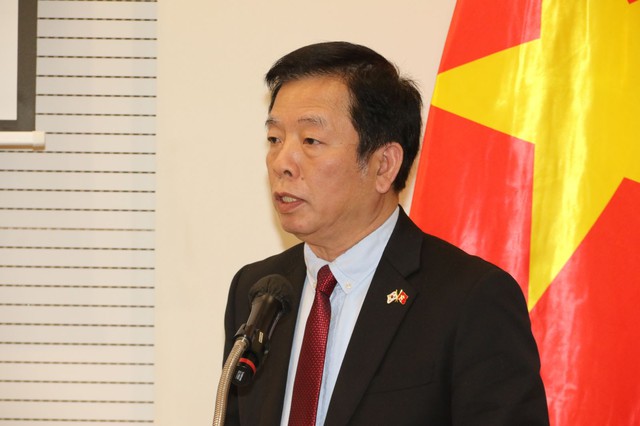
Vietnamese Ambassador to the RoK Vu Ho
The visit, scheduled on April 21-24, is made at the invitation of To Lam and his spouse, comes at a time when bilateral relations are at their most advanced stage, following the elevation of ties to a Comprehensive Strategic Partnership in 2022.
Ambassador Ho noted that Viet Nam has recently consolidated its leadership after the 14th National Party Congress, entering a new phase of development guided by long-term strategic priorities.
In this context, President Lee's decision to visit Viet Nam carries both political and symbolic importance, reflecting Seoul's high regard for Ha Noi and the growing trust and strategic emphasis in bilateral ties.
The South Korea continues to be Viet Nam's largest foreign investor, with total registered capital surpassing US$90 billion, and one of its top trading partners, with bilateral trade projected to reach approximately US$88 billion in 2025, up 8 percent year-on-year.
According to the Ambassador, the visit offers an opportunity for both countries to shift their partnership from broad-based cooperation to deeper, more strategic collaboration—particularly in high technology, innovation, and economic security. This new phase is expected to be defined by stronger trust, more substantive cooperation, and enhanced sustainability.
During the visit, leaders are likely to focus on three key priorities: improving the quality, balance, and sustainability of economic cooperation, with a goal of raising bilateral trade to US$100 billion and eventually US$150 billion by 2030; strengthening integration in strategic supply chains such as semiconductors, digital technologies, data, batteries, and clean energy; and fostering closer links between investment, innovation, and human resource development to elevate Viet Nam's role in global value chains and expand opportunities for Korean businesses.
Science and technology cooperation is expected to serve as a central pillar, with emphasis on joint research and development, technology transfer, and capacity building in areas including artificial intelligence, semiconductors, energy, and smart infrastructure.
On people-to-people ties, Ambassador Ho highlighted their role as a durable foundation of bilateral relations. With around 350,000 Vietnamese living in South Korea and a sizable Korean community in Viet Nam, both countries have developed extensive social linkages. As cooperation shifts toward high-tech sectors, he underscored the importance of investing in education and workforce training, especially in fields such as AI, semiconductors, energy, and logistics. Cultural exchanges, he added, remain a vital "soft bridge" that fosters mutual understanding and trust.
Regarding regional cooperation, the Ambassador noted that Viet Nam and South Korea share common interests in maintaining peace, stability, and development. He suggested enhancing coordination in support of ASEAN centrality and aligning initiatives with the ASEAN Outlook on the Indo-Pacific, including joint efforts in infrastructure connectivity, digital transformation, clean energy, and resilient supply chains, as well as closer engagement in frameworks such as ASEAN+3, the East Asia Summit, and the ASEAN Regional Forum.
He concluded that both countries are well positioned to contribute to building an open, inclusive, and rules-based regional architecture, supporting not only their national interests but also broader regional stability and prosperity./.