
FTSE Russell: Viet Nam will be upgraded from a frontier market to an emerging market in September
VGP - FTSE Russell has confirmed that Viet Nam will be upgraded from a frontier market to an emerging market in September, following an interim review—marking the long-anticipated final approval for the transition.
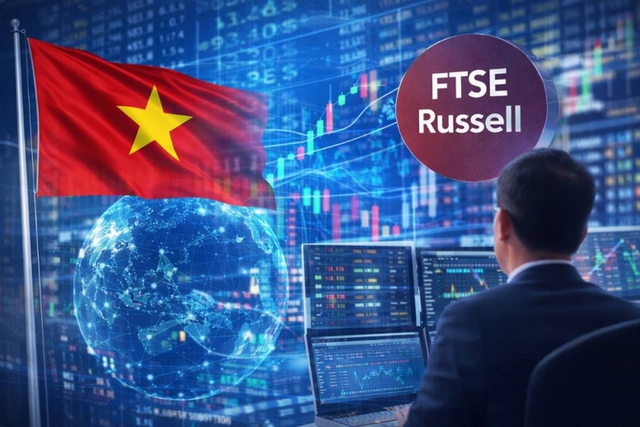
Vietnamese equities will be gradually included in FTSE Russell's global index system starting September 21, with the process expected to continue through 2027.
The decision reflects the Index Governance Board's satisfaction with the country's progress, particularly in implementing the global broker model, a key requirement for effective index replication.
This upgrade places Viet Nam alongside major emerging markets such as India and China, and is expected to open the door for greater participation from passive investment funds in the local stock market.
The move follows a series of market-oriented reforms aimed at improving accessibility and transparency. These include the introduction of a non-pre-funding mechanism, a framework to handle failed trades, and expanded access for foreign investors through global brokerage channels—measures that help reduce transaction risks and enhance investor confidence.
Although Viet Nam had already met the criteria for "secondary emerging market" status in a previous review, the latest assessment signals meaningful improvements in actual trading conditions and market operations. This marks a shift from meeting formal requirements on paper to achieving practical standards expected by international investors.
According to Christine Le, President of the Viet Nam Finance and Investment Association in the UK, the development reflects both the consistency of recent reforms and a tangible improvement in market inevitability.
Viet Nam is now moving closer to being included in the core asset allocation strategies of global institutional investors, rather than remaining a high-growth but non-essential frontier market.
As a result, the upgrade is expected not only to increase capital inflows but also to improve their quality, with a stronger emphasis on long-term, stable investment.
However, the transition also brings higher expectations. Going forward, Viet Nam will need to focus on maintaining emerging market standards by strengthening legal enforcement, improving corporate governance, modernizing market infrastructure, and ensuring consistent policy implementation. Maintaining macroeconomic stability will remain essential to sustaining investor trust and long-term market attractiveness.
As one of the world's leading index providers—alongside MSCI and S&P Dow Jones Indices—FTSE Russell plays a critical role in shaping global investment flows. Its latest assessment is therefore both a milestone in Viet Nam's market upgrade journey and a test of the depth and durability of its reform efforts./.