
Comprehensive, balanced, child rights-based approach needed to protect children online: UNICEF Representative
VGP - UNICEF Representative Silvia Danailov suggests Viet Nam launch a comprehensive, balanced, child rights-based approach to protect children online.
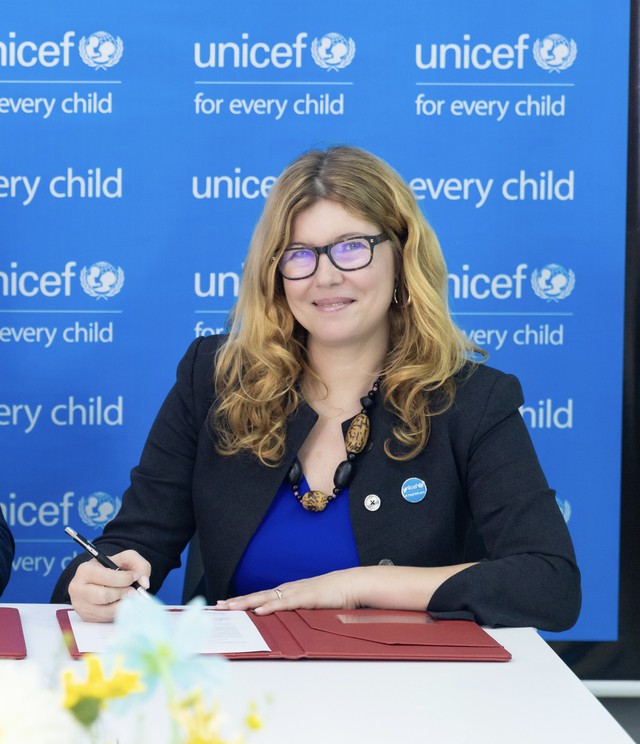
UNICEF Representative Silvia Danailov
In a recent interview with VGP, Danailov said, protecting children online is one of the most urgent challenges facing all countries today, including Viet Nam.
Social media brings both enormous opportunities and serious risks for children. For many young people, these platforms are places to learn, grow connect, express themselves, and access critical information.
But they are also exposed to cyberbullying, harmful content, manipulative design features, scams and contact risks that can harm their mental health and wellbeing.
"Age restrictions alone cannot solve these problems. What Viet Nam and other countries need is a comprehensive, balanced, child rights-based approach to online child protection", she emphasized.
Viet Nam should strengthen platform responsibility
The UNICEF Representative noted that one key priority is strengthening platform responsibility. Children today spend time on platforms that were not designed with their rights in mind.
Regulations should require companies to build safer default settings for children, improve content moderation, effective action to harmful content and ensure transparency in how algorithms work, and provide simple, accessible reporting tools. These are essential to meaningfully reduce the risks children face online — risks that parents alone cannot manage.
According to Danailov, UNICEF has developed global guidelines for the ICT industry on Child Online Protection, providing a foundation for safer and more responsible digital products for children.
As Viet Nam advances its ambitious digital transformation and reform agenda, it is essential to strengthen regulation on online safety so that digital platforms put children's safety and inclusion at the heart of their design processes. This means embedding safer default settings, accessibility, and protective features from the outset — safe by design, inclusive by design, and empowering by design — rather than adding them only after risks emerge.
UNICEF recommends the Government of Viet Nam to provide legal requirements ensuring that internet and digital service providers are obligated to filter, block, promptly remove and report materials that involve online sexual abuse of children.
These measures should be accompanied by regulations and safeguarding policies to protect the rights, privacy and safety of children in the digital environment.
Strengthening these protections will help protect children from harmful content and online risks; while also ensuring they have accessible to effective mechanisms to report violations, she underlined.
Age restrictions
According to the UNICEF Representative, a second priority — and an area where policymaking is especially important — is how Viet Nam approaches age restrictions. It is understandable that age thresholds are being debated, but international experience shows that blanket bans can have unintended consequences.
Children often find workarounds, such as borrowing accounts or moving to less regulated platforms, where they may be even less protected and less likely to seek help when issues arise.
At the same time, if companies believe that children "should not be using" their platforms under a ban, they may feel less responsibility to invest in safer design or child appropriate features.
What is needed instead is evidence based, proportionate age assurance, implemented in ways that respect privacy, account for children's evolving capacities, and focus on preventing clearly defined harms rather than cutting children off entirely. This is especially important for children who rely on online communities for learning, support, or connection — including those in rural areas or who may feel isolated offline.
Policies must protect children without unintentionally limiting their access to vital information or supportive networks.
More investments in digital literacy and resilience
Danailov stated that to protect children online, Viet Nam should accelerate investments in digital literacy and resilience. Children need to learn how to use digital platforms safely, think critically, manage online risks, and understand where to get help.
Parents and educators also need practical guidance and resources — they cannot be expected to supervise complex platforms on their own. Equipping families and schools with the right tools is essential to long-term online safety.
This is why UNICEF Viet Nam is partnering closely with the Ministry of Education and Training to integrate online safety and digital protection into digital literacy and AI competency frameworks for both teachers and students.
Through curriculum integration and capacity-building, teachers are equipped not only with digital and AI skills but also with the knowledge to guide students in safe, ethical and responsible technology use.
At the same time, students are supported to develop critical thinking, digital citizenship and self-protection skills as part of their learning journey.
Strengthening digital safety also requires meaningful engagement with parents, and UNICEF is supporting initiatives that encourage parents to take role in their children's digital learning journey - raising awareness and providing practical guidance so they can confidently support their children in a rapidly evolving digital environment.
Finally, children and youth's voices must be reflected in policy decisions. Children are experts in their own digital lives. Incorporating their perspectives ensures that solutions are grounded in reality and do not overlook the needs of those who may depend on online platforms more than others. Listening to children's experiences — including those from diverse regions and circumstances — helps craft policies that are both protective and empowering.
In short, rather than focusing on whether children under 16 should be banned from social media, the more meaningful question could be how Viet Nam can build a digital environment that is safe, inclusive and developmentally appropriate — one that promotes children's agency and skills in using social media appropriately and safely, and protects children from harm while ensuring their rights to access information, learn, connect and participate fully in the digital age./.