ASEAN Secretary-General: Viet Nam plays bridge-building role in ASEAN-Russia strategic partnership
VGP - Vietnamese Prime Minister Le Minh Hung's participation at the ASEAN–Russia Commemorative Summit in Kazan, Russia, from June 17–19 will underscore the country’s proactive and constructive diplomatic engagement while contributing to efforts to strengthen the ASEAN–Russia Strategic Partnership amid a complex and fragmented global landscape, ASEAN Secretary-General Kao Kim Hourn said.
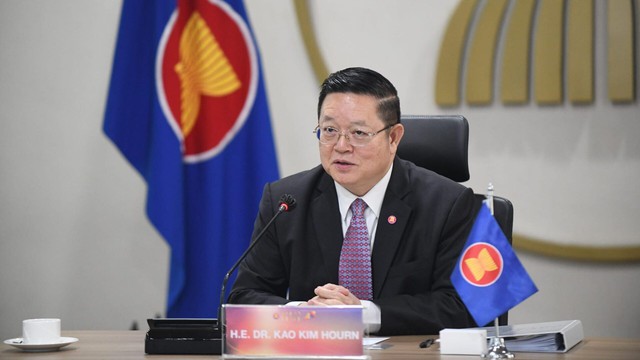
ASEAN Secretary-General Kao Kim Hourn
The ASEAN Secretary-General made the above statement during an interview with the VGP ahead of the Summit.
Kao Kim Hourn also highlighted Viet Nam's growing role in advancing ASEAN–Russia relations.
According to Kao, the Vietnamese Prime Minister's participation in the Summit reflects Viet Nam's strong commitment to ASEAN Centrality and to ensuring that ASEAN remains the primary driving force in shaping its external relations.
In its capacity as the incoming Country Coordinator for ASEAN-Russia Dialogue Relations for the 2027–2030 period, Viet Nam will be well positioned to help steer follow-up from the ASEAN–Russia Commemorative Summit in Kazan.
"In today's complex and fragmented global landscape, Viet Nam's presence at the Summit signals ASEAN's continued commitment to inclusive and constructive dialogue with all partners," Kao Kim Hourn noted, adding that This approach strengthens regional peace, stability, and economic resilience while advancing the shared goals of the ASEAN Community.
A constructive and bridge-building partner
Strengthening partnerships within ASEAN and between ASEAN and external partners remains one of the Secretary-General's key priorities under his "6Ps" agenda: Peace, Prosperity, Planet, People, Partnerships, and Potentials.
Within this framework, Viet Nam has consistently played a vital, constructive, and bridge-building role in ASEAN–Russia relations.
Kao Kim Hourn emphasized that Viet Nam's deep-rooted and multi-faceted bilateral ties with Russia provide a strong foundation that further enhances the ASEAN–Russia Strategic Partnership.
Whether serving as Country Coordinator for ASEAN–Russia Dialogue or advancing practical cooperation across the three ASEAN Community pillars, Viet Nam's balanced and pragmatic approach helps ensure that our partnership delivers tangible, mutually beneficial outcomes — particularly in traditional areas such as energy, education, trade, and investment — while remaining fully aligned with the ASEAN Outlook on the Indo-Pacific (AOIP).
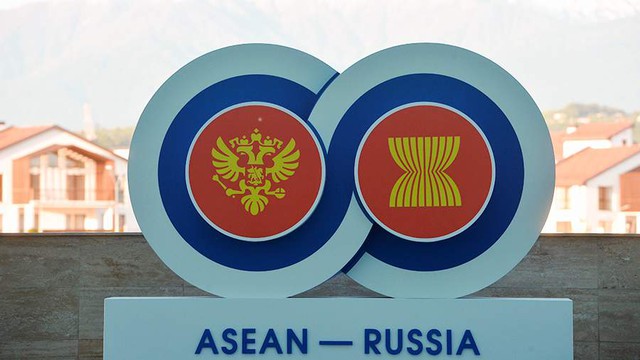
Photo: RIA Novosti/Pavel Lisitsyn
Unlocking potential in emerging sectors
Looking ahead, the ASEAN Secretary-General identified clean energy, digital transformation, artificial intelligence (AI), and smart cities as key areas with significant untapped potential for ASEAN–Russia cooperation.
As ASEAN accelerates both its digital and green transitions, Russia's technological capabilities could complement the region's dynamic digital economy and growing urban development needs.
The signing of the ASEAN Digital Economy Framework Agreement (DEFA), expected later this year at the 49th ASEAN Summit, is projected to help unlock a digital economy worth up to US$2 trillion by 2030. Against this backdrop, opportunities for cooperation in digital infrastructure, cybersecurity, AI governance, and secure data flows are expanding.
Similarly, the ASEAN Smart Cities Network offers a ready platform for cooperation. Russia's expertise in urban technologies, digital municipal platforms, and intelligent traffic systems can support ASEAN's efforts to manage rapid urbanization sustainably.
In the energy domain, joint exploration of clean energy technologies, grid modernization, and low-carbon solutions will be vital to advancing energy security and achieving the region's net-zero ambitions.
Priorities for advancing ASEAN–Russia relations
To fully realize the potential of ASEAN–Russia cooperation, both ASEAN and Viet Nam should continue to pursue a pragmatic, inclusive, and principle-based approach, according to the Secretary-General.
Viet Nam, with its longstanding and trusted bilateral ties with Russia, can play a pivotal bridging role by sharing best practices, facilitating people-to-people exchanges, and identifying new avenues for practical cooperation that benefit the wider ASEAN community. ASEAN, on its part, should sustain high-level political engagement, including through the upcoming ASEAN–Russia Commemorative Summit, and ensure that cooperation remains firmly anchored in ASEAN Centrality and the ASEAN Outlook on the Indo-Pacific (AOIP).
At the regional level, ASEAN should maintain high-level political engagement, including through the upcoming ASEAN–Russia Commemorative Summit, while ensuring that cooperation remains anchored in ASEAN Centrality and the AOIP.
The Secretary-General highlighted four priority areas for the next phase, focusing on delivering tangible outcomes in both traditional and emerging sectors as follows:
Trade, Investment, and Economic Connectivity: Building on the upcoming ASEAN–Russia Strategic Program on Trade and Investment Cooperation (2026–2035), we should aim to diversify supply chains, enhance food and energy security, and promote seamless trade facilitation.
Digital Transformation and Innovation: Deepening collaboration in digital economy, cybersecurity, artificial intelligence, and smart infrastructure, in alignment with ASEAN's Digital Economy Framework Agreement (DEFA).
Sustainable Development and Energy Transition: Advancing cooperation in clean energy, renewable technologies, and peaceful use of civilian nuclear energy, including through the implementation of the ASEAN–Russia Energy Work Plan 2026–2030 in line with ASEAN's net-zero ambitions and the ASEAN Plan of Action for Energy Cooperation (APAEC) 2026–2030 — leveraging Russia's relevant expertise to support ASEAN's transition toward a low-carbon and resilient energy future.
Human Capital and People-to-People Ties: Expanding education, skills development, youth, tourism, and cultural exchanges to foster greater mutual understanding, building on the longstanding provisions in the ASEAN–Russia Comprehensive Plan of Action (CPA) 2021–2025, including through the ASEAN Center at MGIMO University.
By prioritizing these areas with a clear focus on mutual benefit, complementarity, and respect for international law, ASEAN and Russia can build a more resilient and future-oriented Strategic Partnership that contributes meaningfully to regional peace, stability, and prosperity.
Expectations for the Kazan Summit
The ASEAN Secretary-General expressed confidence that the Summit is rooted in substance, strategy, and forward momentum. With the current 2021–2025 Comprehensive Plan of Action (CPA) expiring, a successor CPA (2026–2030) would be adopted to serve as a forward-looking roadmap guiding cooperation in the next phase.
At the same time, the Summit would deliver a broader set of outcomes – including the Kazan Declaration 2026 ASEAN-Russian Federation: Unity in Diversity - 35 Years Together, as well as the Joint Statement of ASEAN and the Russian Federation on Energy Cooperation and the Joint Statement of ASEAN and the Russian Federation on Cultural Cooperation – which, taken together, provide a comprehensive and balanced framework across the political-security, economic, and socio-cultural pillars.
In today's complex and fragmented global environment, these outcomes should help reinforce a resilient partnership, anchored in practical cooperation and shared interests.
Ultimately, ASEAN expects the Summit to reaffirm Russia's support for ASEAN Centrality and to reflect a shared commitment to peace, stability, and prosperity, ensuring that ASEAN-Russia cooperation continues to deliver tangible benefits to our peoples./.