
THE SOCIALIST REPUBLIC OF VIET NAM
Government News
Viet Nam proves resilient with remarkable GDP growth: HSBC
VGP - Viet Nam has proved its economic resilience with remarkable GDP growth, hitting a high of 8 percent for 2025, unveiled HSBC in its report Viet Nam at a glance released on January 13.
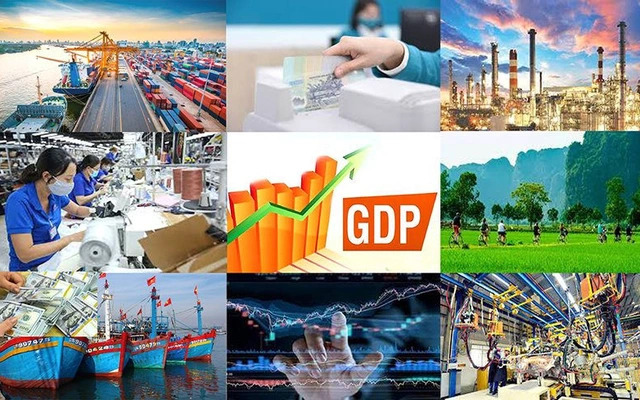
This is the second-fastest growth rate in 15 years, likely placing Viet Nam as the growth champion, not only in ASEAN, but also in Asia, in 2025.
The bank noted that while 2025 was all about the on-and-off tariff shocks, Viet Nam's trade flourished to a record high of US$928 billion, a 18 percent year-on-year increase.
Export growth is still much stronger than others at a pace of 30 percent year-on-year on a 3-month-moving-average basis.
Remarkably, Viet Nam's electronics exports now account for 35 percent of its total export basket, jumping from only 5 percent in 2010. Meanwhile, its textiles and footwear exports fell from its peak of 30 percent in 2005 to a little over 10 percent now, reflecting the nation's export journey up the value chain.
According to HSBC, in addition to shipping the 'right' products, Viet Nam has gained more share in the U.S. market. The nation's exports to the U.S. jumped almost 30 percent year-on-year in 2025. Despite being subject to a headline tariff of 20 percent, Viet Nam has captured even more share in the U.S. market in products such as phones, textiles and footwear.
Trade is strong, but it's more than trade: Viet Nam's domestic resilience is also holding up. Private consumption grew 8 percent on the back of a high base while investment accelerated to almost 9 percent in 2025. The push for infrastructure development serves as a traditional playbook that Viet Nam relies on.
On the tourism front, despite missing its earlier target, Viet Nam has welcomed a record high number of over 21 million tourists, generating tourism receipts worth US$40 billion, equivalent to 7 percent of GDP.
Its tourism recovery has been strong, with tourist numbers almost at 120 percent of 2019's level. This is largely aided by a swift return of Chinese tourists, which is impressive considering that Viet Nam does not have a visa-free scheme with mainland China.
HSBC expects GDP growth to hit 6.7 percent in 2026 and inflation to remain benign at 3.5 percent./.