
THE SOCIALIST REPUBLIC OF VIET NAM
Government News
Resolution No. 10-NQ/TW marks pivotal shifts in Viet Nam's foreign investment attraction strategy
VGP - Standing Deputy Prime Minister Pham Gia Tuc summarized the key principles and core contents of the Politburo's Resolution No. 10-NQ/TW on the development of the foreign-invested economic sector, at the teleconference held on June 30.
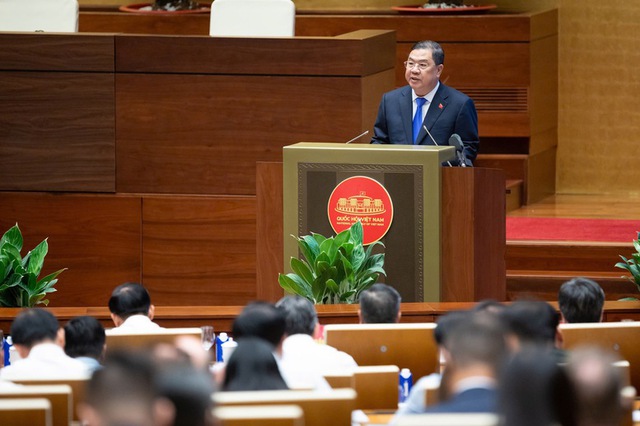
Standing Deputy Prime Minister Pham Gia Tuc highlights the key principles and core contents of the Politburo's Resolution No. 10-NQ/TW on the development of the foreign-invested economic sector at the teleconference, June 30, 2026 - Photo: VGP
Accordingly, he highlighted the six major shifts in the development of the foreign-invested economic sector, including:
(1) The shift from attracting foreign investment to developing the foreign-invested economic sector. The Resolution adopts a more comprehensive approach, including foreign direct investment (FDI), portfolio investment, capital markets, and international financial institutions.
It regards the foreign-invested economic sector as an integral part of the national economy, together with the domestic economic sector to serve the country's development objectives.
(2) The shift from emphasizing the scale of investment capital to prioritizing quality, efficiency, and value-added investment. The focus is no longer on attracting a greater number of investment projects, but on selecting projects that feature advanced technologies, innovation, modern governance, strong spillover effects, and significant contributions to improving the economy's productivity and competitiveness.
(3) The shift from input-based incentives to outcome-based incentives. Incentive policies are being redesigned to be linked to the fulfillment of commitments on technology transfer, research and development (R&D), workforce training, linkages with domestic enterprises, green transition, and sustainable development.
(4) The shift from merely luring FDI to building a comprehensive ecosystem for international capital flows. It places foreign direct investment, portfolio investment, capital markets, international financial centers, and new development spaces (such as free trade zones and special economic zones) within a unified framework with a view to improving the mobilization and allocation of resources.
(5) The shift from investment administration into creating an enabling environment for investment and development. The State will focus on improving institutions, enhancing the quality of national governance, developing infrastructure and human resources, and fostering an innovation ecosystem to create favorable conditions for both domestic and international resources to thrive.
(6) The shift from competition among localities to attract investment at national-coordination development level. The Resolution calls for stronger regional connectivity, closer linkages between foreign-invested sector and domestic economy, and greater utilization of growth poles and innovation hubs to enhance the development efficiency of the national economy.
Pham said, previously, whereas Viet Nam only concentrated on attracting foreign capital, the new phase sets a higher objective: maximizing the effectiveness of these resources, combining them with the country's internal strengths to build new development capabilities and enhance the economy's self-reliance, competitiveness, and resilience.
Viet Nam to attract US$200-300 bln in newly registered FDI by 2030
So far, Viet Nam has emerged as an attractive investment destination in the region, attracting nearly US$550 billion in registered foreign investment in more than 46,000 active projects.
The foreign-invested economic sector has made significant contributions to economic growth, industrialization and modernization, export expansion, job creation, improved governance capacity, and the nation's standing in the global economy.
By 2030, the Resolution sets a goal to attract US$200–300 billion in newly registered FDI, with US$150–200 billion to be disbursed.
The quality of capital inflows will be improved, with 75 percent of newly registered investment coming from developed economies with advantages in technology, capital, and modern governance.
Under the Resolution, the country will increase the average localization rate in key manufacturing industries to 40–50 percent, while enabling around 10,000 Vietnamese enterprises to join the supply chains of foreign-invested enterprises.
Viet Nam's stock market will be upgraded into emerging market status before 2030, laying the foundation for attracting substantially larger inflows of international portfolio investment.
Looking ahead to 2045, the Resolution envisions a foreign-invested economic sector that is efficient, sustainable, and closely integrated with the state-owned and private sectors.
Viet Nam targets to become a regional hub for manufacturing, services, innovation, and corporate management for numerous multinational corporations, thereby strengthening its position in global value chains.
By then, the foreign-invested economic sector is expected to account for around 25 percent of total social investment and to contribute approximately 30 percent of the nation's GDP./.