
THE SOCIALIST REPUBLIC OF VIET NAM
Government News
Politburo calls for development of low-altitude space economy
VGP - The Politburo has called for the development of a low-altitude space economy as a new growth driver, with a focus on technological self-reliance, modern infrastructure, strategic data and the development of emerging technologies such as semiconductors, artificial intelligence and space technology.
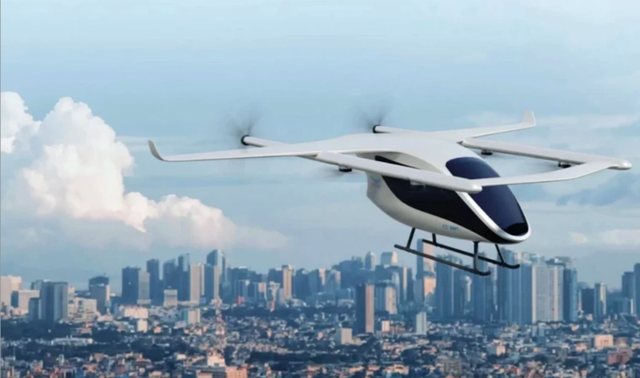
By 2030, Viet Nam aims to operationalize three national-level flight test zones across diverse topographical terrains, alongside at least one national R&D and testing center dedicated to UAVs.
The requirements were set out in Conclusion No. 99-KL/TW dated September 28, 2026, on the exploitation, governance and protection of low-altitude space to serve national development in the new situation.
The conclusion identifies low-altitude space as a national resource and a new development space, while emphasizing the need to ensure national sovereignty, defense, security and safety.
Three national UAV testing zones by 2030
The Politburo requested greater mobilization of domestic resources and stronger technological self-reliance in infrastructure, technology and strategic data, linking low-altitude space development with the semiconductor, artificial intelligence and space technology industries.
The move is aimed at turning technological capabilities into national strength while raising public awareness and building social consensus on the development of the low-altitude space economy.
Under Conclusion No. 99-KL/TW, Viet Nam targets putting into operation three national-level flight testing zones and at least one national research and testing center for unmanned aerial vehicles (UAVs) by 2030.
The country also strives to raise the localization rate of key UAV product lines serving production to more than 30–40 percent by 2030 and over 85 percent by 2045.
By 2045, the low-altitude space economy is expected to become an important economic-technical sector and one of the country's new growth drivers, with strong regional competitiveness and a contribution of approximately 1.5 percent of national GDP.
The Politburo requested the completion of the legal framework to meet requirements for the exploitation, governance and protection of low-altitude space in economic, civil, defense and security activities.
The national governance model is to be modernized and unified, based on data, digital platforms and risk management. Low-altitude activities will be managed according to operating areas, altitude levels, types of operations and risk levels.
In 2027, Viet Nam is expected to develop and complete national technical standards and regulations on infrastructure, equipment and management technologies in line with international standards, while strengthening capacity for testing, inspection, certification and conformity assessment.
The conclusion also calls for the application of controlled testing mechanisms, or "sandbox" mechanisms, for new technologies, products, services and business models, with clearly defined scopes, time limits, evaluation criteria, monitoring mechanisms and conditions for termination or expansion.
State to lead initial market development
The State will play a leading and orienting role in developing the initial market through mechanisms such as public procurement, pilot programs and applications in the public sector.
At the same time, businesses, research institutes and universities will be encouraged to participate in UAV research, development, manufacturing and commercialization.
The Politburo also called for stronger investment in infrastructure and scientific research, as well as the development of a low-altitude space industry.
The State will prioritize budget resources for essential infrastructure serving the governance, exploitation and protection of low-altitude space, ensuring synchronization, modernization and shared use, while enabling integration and interconnection with airspace management systems, military and civil aviation operations and other specialized management systems.
The conclusion calls for support mechanisms and incentives in taxation, credit and land for businesses engaged in UAV research, manufacturing, testing and commercialization, serving both domestic and export markets.
Viet Nam will also establish national-level UAV flight testing zones and industrial clusters to support the development of a domestic UAV ecosystem.
The policy is expected to create a foundation for businesses, research institutions and universities to develop technologies and products while enabling Viet Nam to gradually build domestic capabilities in UAV manufacturing, infrastructure, data and related services./.