THE SOCIALIST REPUBLIC OF VIET NAM
Government News
Viet Nam, U.S. are finalizing technical matters on reciprocal trade deal
VGP - Viet Nam and the U.S. are finalizing technical matters to sign a reciprocal, fair and balanced trade agreement, said Prime Minister Le Minh Hung.
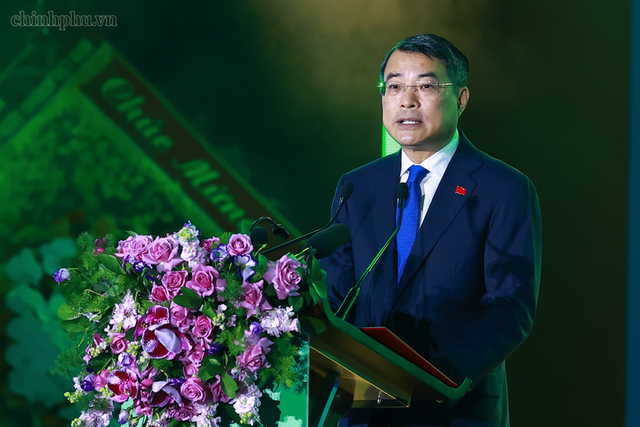
Prime Minister Le Minh Hung
The Government chief made the above remarks while addressing a ceremony held in Ha Noi on November 27 to mark the 30th founding anniversary of Viet Nam's securities sector.
The agreement, once signed and implemented, would provide a stable and favorable business environment for companies and investors from Viet Nam, the U.S. and other countries, said the Prime Minister.
The tariff rate on Vietnamese products would be much lower than the latest rate of 35 percent proposed by the Office of the U.S. Trade Representative, he added.
The Ministry of Industry and Trade said the Office of the U.S. Trade Representative's tariff rate proposal has yet to take effect, adding that the tariff rate on Vietnamese goods could be reduced to 20 percent if the two countries reach a reciprocal trade agreement.
Speaking at a press briefing on Thursday, Deputy Minister of Industry and Trade Luong Hoang Thai said that Viet Nam had been holding discussions with the U.S. on the matter.
Viet Nam had proactively offered commitments comparable to those under its existing free trade agreements, with some commitments going beyond those made under any agreement the country has previously joined, he said.
According to the ministry, the Office of the U.S. Trade Representative will seek public feedback and hold a public hearing before determining the final tariff rates, how they will be applied alongside existing duties, and which products will qualify for exemptions.
A final decision could be announced as early as February next year.
On November 25, the Office of the U.S. Trade Representative issued preliminary findings in its Section 301 investigation under the Trade Act of 1974 into structural excess capacity and production in manufacturing industries across 14 of the 16 economies under investigation.
The economies include Viet Nam, China, the European Union, Singapore, Switzerland, Indonesia, Malaysia, Cambodia, Thailand, South Korea, Taiwan, Bangladesh, Japan and India. Under the preliminary findings, the USTR proposed an additional tariff of up to 35% on imports from Viet Nam. The rate could be reduced to 20 percent if Viet Nam and the U.S. reach a reciprocal, fair and balanced trade agreement.
In July, the U.S. began imposing new tariffs on imports from 60 economies over the importation of goods produced with forced labor, with Viet Nam subject to a tariff rate of 12.5 percent./.