THE SOCIALIST REPUBLIC OF VIET NAM
Government News
More than 30 hospitals capable of organ transplantation
VGP - Viet Nam currently has more than 30 hospitals licensed and capable of performing organ transplants, marking significant progress in the country’s medical dream after three decades of development.
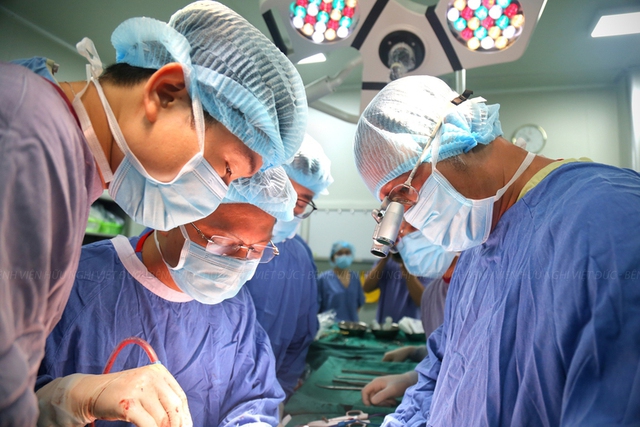
Among them, nine hospitals have been licensed for liver transplants and five for heart and lung transplants.
Leading centers are mainly located in Ha Noi and Ho Chi Minh City, such as 108 Military Central Hospital, Military Hospital 103, Hue Central Hospital, Cho Ray Hospital, Viet Duc University Hospital, and Bach Mai Hospital. They have mastered techniques for heart, liver, kidney, pancreas, lung, and intestines, achieving survival rates comparable to developed nations.
Although transplant techniques are not yet uniformly implemented across all facilities, post-transplant survival rates and patient longevity are very high, comparable to those in many countries worldwide. Notably, a patient who underwent a lung transplant at National Lung Hospital has been living in good health eight years after the procedure.
Viet Nam can now transplant almost every organ in the human body, and with great effectiveness. This brings tremendous hope to patients. From a single brain-dead donor, Vietnamese doctors can immediately save six to seven other lives.
Since the first kidney transplant in 1992, Viet Nam has performed approximately 10,600 organ transplants. The 2022–2025 period marked a breakthrough, with more than 1,000 transplants carried out each year. In 2025 alone, around 1,368 procedures were performed—the highest number ever recorded—making Viet Nam the leading country in Southeast Asia in terms of annual transplant volume.
According to Associate Professor Dr. Dong Van He, Director of the National Coordination Center for Human Organ Transplantation, from 1992 to 2021 (30 years since the first transplant), international organisations had not recorded Viet Nam’s organ donation and transplantation data. However, since 2022, the country has appeared for the first time on the global organ donation and transplantation map.
Viet Nam has now mastered techniques for all six types of organ transplants, including kidney, liver, heart, lung, pancreas, and intestine. Among these, kidney transplants account for the largest proportion, with nearly 9,000 cases; liver transplants have exceeded 750 cases; heart transplants have surpassed 120 cases; while lung transplants and complex multi-organ procedures have also been increasing.
Post-transplant survival rates in Viet Nam are high, reaching 90–95 percent for kidney transplants, 80–90 percent for liver transplants, and 85–90 percent for heart transplants. Many kidney transplant recipients have been able to conceive and give birth, and numerous cases have maintained graft function for 25–30 years before requiring re-transplantation.
In the past, around 2007, each liver transplant required the mobilization of hundreds of medical staff; now only 10–15 people can perform an overnight transplant," shared Prof. Nguyen Tien Quyet.
Organ transplantation has become a reality thanks to the remarkable advances of Vietnamese medicine, opening the door to renewed life for patients. Viet Nam has mastered and successfully performed transplants of various organs, including kidneys, livers, hearts, lungs, intestines, and limbs (hands). In addition, the country has implemented tissue transplants such as corneas, skin, and stem cells.
Especially, since Prime Minister Pham Minh Chinh called on all Vietnamese adults, regardless of gender, ethnic groups, religion, or region, to register as an organ donor on May 19, 2024, organ donor data bank, managed by the National Coordination Center for Human Organ Transplantation (NCC), under the Ministry of Health has recorded many positive changes.
"Families whose relatives unfortunately suffer severe accidents or traumatic brain injuries, once provided with explanations and counseling about organ donation, have shown cooperative attitudes and a willingness to participate in the resuscitation process and brain-death assessment," said Associate Professor Dr. Duong Duc Hung, Director of Viet Duc University Hospital.
These achievements have further highlighted the accomplishments of Viet Nam's healthcare sector. The noble gesture of donor families, combined with high professional expertise, thorough preparation of equipment and logistics, and effective organ coordination, has brought hope for new lives to thousands of patients awaiting transplants./.