THE SOCIALIST REPUBLIC OF VIET NAM
Government News
Ha Noi to showcase 100-year Master Plan next week
VGP – The 100-year Master Plan for Ha Noi Capital will be showcased at the Ha Noi Museum since June 29, said Deputy Director of the Municipal Finance Department Le Trung Hieu.
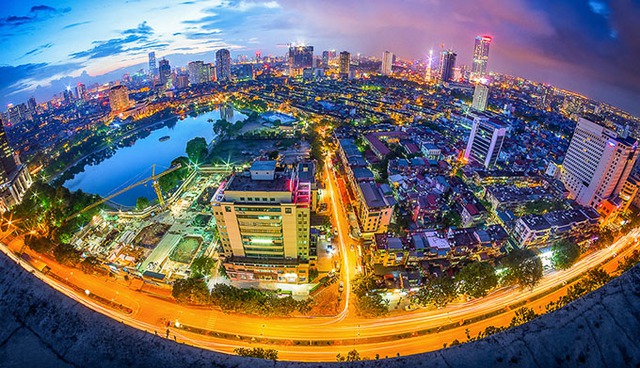
The move aims to ensure transparency, thus creating a solid ground for citizens and investors to proactively design investment and business strategies.
The Master Plan was approved by the Ha Noi Municipal People's Council on May 15, 2026, with an aim to transform the Capital into a green, smart and internationally competitive city while preserving its cultural heritage.
The Master Plan clearly defines Ha Noi's development model based on a multi-tiered, multi-layered, multi-polar, and multi-centric structure, with the Red River serving as the primary ecological and cultural landscape axis.
Ha Noi will establish 9 development poles, 9 major centers, and 9 impetus axes to create new development space and long-term growth drivers, and to elevate the Capital's status in the region and the world.
The Capital City plans to achieve the annual average growth rate of 11 percent in 2026-2035. Its GRDP is projected to reach around US$200 billion by 2035 and US$640 billion by 2045.
In its 100-year vision, Ha Noi will strive to become a global city, establish itself among the world's leading Capitals for quality of life and well-being.
To achieve the above goals, the National Assembly adopted the Capital Law, which is scheduled to take effect from July 1, 2026 and the Resolution No. 258/2025/QH15. They are the legal frameworks for Ha Noi to further boost the decentralization of powers and authority, mobilize resources for development, advance the development of free trade zones and free economic zones.
These legal frameworks are expected to help Ha Noi attract strategic investors in such fields like high technology, semiconductor, artificial intelligence, big data, logistics, green finance, innovation, among others./.