
THE SOCIALIST REPUBLIC OF VIET NAM
Government News
Gov’t targets to resolve institutional bottlenecks in 2026
VGP - The year of 2026 will be a pivotal year for Viet Nam to comprehensively resolve long-standing institutional bottlenecks, said Prime Minister Le Minh Hung.
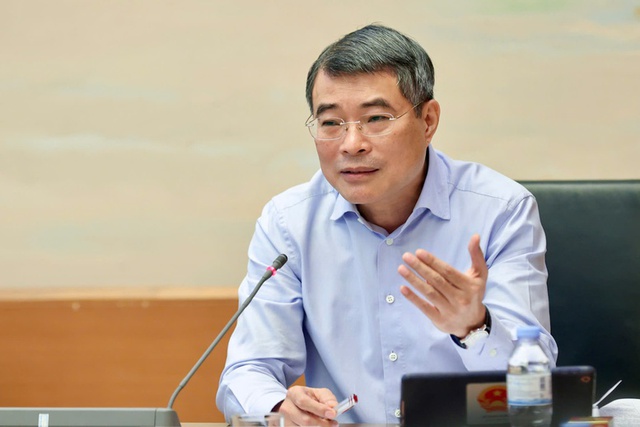
Prime Minister Le Minh Hung
Speaking during group discussions at the first session of the 16th National Assembly on April 10, the Prime Minister noted that the Government had carefully reviewed lawmakers' constructive contributions to key reports on socio-economic performance, public investment, and financial planning for the 2026–2030 period.
He appreciated proposals to simplify reporting to the National Assembly by merging socio-economic updates into a single consolidated report, supplemented by annexes containing detailed data, allowing for a more streamlined review process.
At the session, the Government submitted a series of reports on 2025 socio-economic development plan, the 2026 socio-economic development plan, the five-year socio-economic development strategy for 2026–2030, the medium-term public investment plan, the national financial plan, and the public debt management strategy for the same period.
According to the Prime Minister, these reports have received broad support from lawmakers. He highlighted that achieving double-digit economic growth remains a central objective, backed by strong political resolve.
He outlined three strategic breakthroughs to achieve this goal, placing institutional reform at the forefront. The Government plans to conduct a comprehensive review of the legal system in 2026 to develop a modern legal framework, and address institutional obstacles, including issues related to the two-tier local administration model, by the second quarter.
Efforts will also be made to complete national socio-economic and land-use planning and resolve thousands of long-delayed projects, including renewable energy developments.
The Prime Minister underscored the importance of clearly specifying the responsibilities of local authorities and committed to completing major institutional tasks by mid-2026.
Administration reform will be further accelerated in the direction of cutting unnecessary procedures, business conditions, and compliance costs, while improving the overall business environment. Special mechanisms and policies for specific localities will also be reviewed.
On infrastructure, priority will be given to major transport, energy, and logistics projects, along with adjustments to the national power development plan to strengthen energy security and expand renewable energy capacity.
The third breakthrough focuses on human resources development, particularly high-quality training linked to innovation, digital transformation, and closer cooperation among universities, research institutes, and enterprises.
To support high growth, total social investment is expected to reach around 40 percent of GDP in the current term, with public investment making up about 20 percent, requiring significant mobilization of private and foreign capital. The Prime Minister stressed the need for a transparent, stable legal environment to attract investment.
He also cautioned that all growth ambitions must be grounded in macroeconomic stability, warning against overheating growth that could threaten economic fundamentals. The Government will continue coordinating fiscal, monetary, and trade policies to respond to global uncertainties./.