
THE SOCIALIST REPUBLIC OF VIET NAM
Government News
Gov’t issues action program to boost State economy development
VGP - The Government has adopted an action program detailing the implementation of the Politburo’s Resolution No. 79-NQ/TW on State economy development.
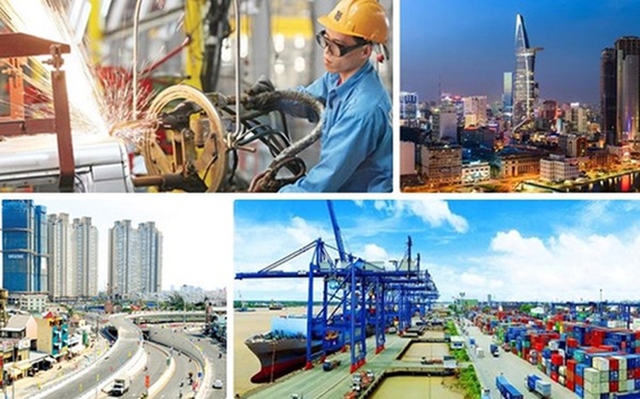
The program seeks to concretize and fully implement the viewpoints, goals, tasks and solutions outlined in Resolution No. 79-NQ/TW.
Under the program, ministries, agencies and localities must thoroughly grasp the Party's guidelines on developing the State economy and renew their leadership mindset, shifting from administrative control to development facilitation, modern governance and decisive action.
They are required to review legal documents within their respective domains to promptly remove institutional bottlenecks and clearly define ownership rights, State management functions, the implementation of political and non-profit tasks, and business activities of State economic organizations.
Administrative procedures will be streamlined to cut compliance costs and processing time, while expanding decentralization and delegation of authority, enhancing autonomy and accountability, and applying risk management principles by shifting from pre-inspection to post-inspection.
The program also emphasizes the need to improve the quality of human resources, particularly leaders, managers and experts in State economic establishments and organizations, along with effective policies to attract and utilize talent based on competence, professional ethics and performance.
Action plans on State economy development must be incorporated into annual and five-year socio-economic development plans of ministries, agencies and localities, with sufficient budget allocations.
The Government calls for the formulation and enforcement of fair, transparent and market-based mechanisms in mobilizing and utilizing national resources.
Coordination between ministries and agencies and the Ministry of Public Security will be strengthened to utilize national databases in monitoring and assessing the management and use of State capital and assets, thereby supporting policy formulation and resource allocation. Overlapping inspections, audits and examinations must be avoided to prevent disruptions to normal operations.
The program also stresses the need to adopt a robust mechanism to protect officials who dare to think, dare to act and dare to take responsibility for the common good.
The Ministry of Public Security is tasked with further improving national databases, particularly those related to State economic resources. Violations in the management of State financial resources, assets, land, minerals and public capital must be handled strictly.
Meanwhile, the Ministry of Culture, Sports and Tourism is requested to direct media and press agencies to enhance the quality and effectiveness of communication, provide objective, accurate and comprehensive information on the State economic sector, and promote exemplary, innovative and effective models.
Strict and transparent measures will be taken against harassment, corruption and the spread of false or misleading information that adversely affects State economic organizations and units.
The program outlines specific tasks across key areas, including land and natural resources, infrastructure assets, the State budget, national reserves, extra-budgetary financial funds, State capital in enterprises, State-owned enterprises, State credit institutions and public non-business units.
Under Resolution 79, Viet Nam aims to become a developing country with modern industry and upper-middle income status by 2030, and a developed and high-income country by 2045.
State economy must become the “national fulcrum” in the new era, leading innovation, digital transformation, and green transition, and spearhead key industries and fields.
The State economic sector comprises resources owned, managed, and controlled by the State, such as land, natural resources, infrastructure, the state budget, national reserves, off-budget financial funds, state-owned enterprises and credit institutions, state capital in enterprises, and public service units.
By 2045, the State economic sector will become a solid foundation ensuring the autonomy and self-reliance of the economy. During this period, national reserves are expected to reach two percent of the nation's GDP, and about 60 SMEs will be ranked among the 500 largest companies in Southeast Asia.
The Resolution emphasizes that the State will create a fair competitive environment for all economic sectors in exploiting and using national resources, while encouraging public–private partnerships.