
THE SOCIALIST REPUBLIC OF VIET NAM
Government News
First carbon trading exchange set to make debut next week
VGP - The first carbon trading exchange in Viet Nam is set to make debut on June 29.
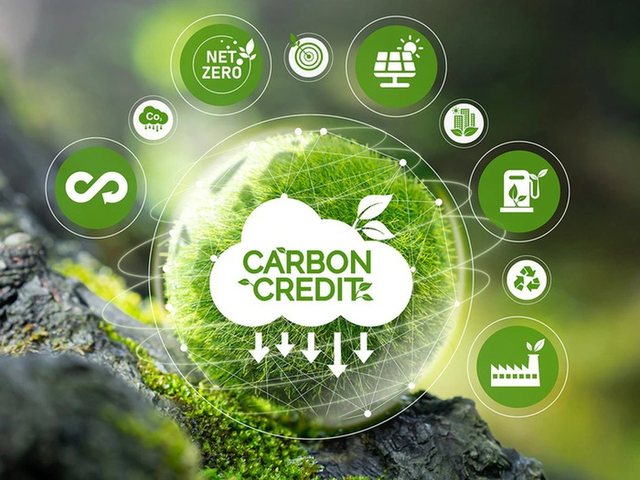
In a bid to build a carbon market, the Government of Viet Nam approved pilot greenhouse gas emission quotas for key industrial sector in 2025 and 2026. This move aims to tighten limits on some of Viet Nam's biggest emitters.
Under this pilot policy, Ministry of Agriculture and Environment has allocated greenhouse gas emission quotas to 110 facilities.
The ministry has also issued a circular regulating the management and operation of the national registry system for greenhouse gas emission qoutas and carbon credits, providing the foundation for managing and trading commodities on the carbon exchange.
In recent January, the Government promulgated Decree 29/2026/ND-CP (Decree 29), paving for the establishment of domestic carbon exchange. This Decree stipulates that the domestic carbon exchange is a comprehensive legal framework for the organization and operation of the carbon market in Viet Nam.
Comprising six chapters and 35 articles, Decree 29 regulates activities related to the domestic carbon trading platform such as registration, domestic coding, transfer of ownership, custody, trading, and settlement of greenhouse gas (GHG) emission quotas and eligible carbon credits. It also defines the responsibilities of governing agencies and organizations in managing the exchange, as well as requirements for reporting and information disclosure.
The launch of the domestic carbon exchange marks a significant milestone in the development of Viet Nam's carbon market, making contributions to fulfilling the country's international commitments to reducing greenhouse gas emissions, promoting green transition, fostering the development of a low-carbon economy, and providing businesses with an additional market-based instrument to support the achievement of their sustainable development goals.
Viet Nam is actively developing a centrally managed domestic carbon market, with a pilot phase from late 2026 to 2028 and full implementation scheduled for 2029.
This development has been identified as a pivotal strategy to achieve its greenhouse gas (GHG) emission reduction targets by 2030 and ultimately reach an ambitious goal of reaching net-zero emissions by 2050, which aligns with Viet Nam's broader environmental and economic objectives./.